
Most AI scribes focus on one thing: transcribing patient conversations.
That solves part of the problem. But it leaves a critical gap.
Physicians don’t just need help documenting today’s encounter. They need help understanding yesterday’s 40-page specialist report, last month’s emergency room summary, and years of fragmented patient histories scattered across multiple PDFs.
This gap matters more than many realize. A landmark study published in Annals of Internal Medicine found that during the office day, physicians spent 27% of their time on direct clinical face time with patients and 49.2% on EHR and desk work.
This is where automated clinical documentation extends beyond dictation to deliver hidden value that most practices haven’t yet discovered: intelligent PDF summarization with full traceability.
The Dictation-Only Limitation
Standard AI scribes do one thing well: capture what happens in the exam room. They listen, transcribe, and structure conversations into SOAP notes with AI drafts.
But when a patient arrives with referral letters from multiple specialists, imaging reports, surgical histories, and medication lists from previous providers, dictation AI doesn’t help. The physician still manually reads every page, hunting for relevant details.
Consider a family physician preparing for a complex chronic disease follow-up. If they receive several reports requiring review right before an appointment, dictation AI contributes nothing here. The physician still manually reviews every page, hunting for relevant details.
Meanwhile, the administrative cost of this burden is enormous. Research published in JAMA estimates that administrative expenses account for 15–25% of total U.S. healthcare expenditures, representing roughly $600 billion to $1 trillion annually, with billing, coding, and physician administrative work as major drivers. More recent analysis estimates total administrative spending at $950 billion in 2019 alone.
The Hidden Values of PDF Summarization
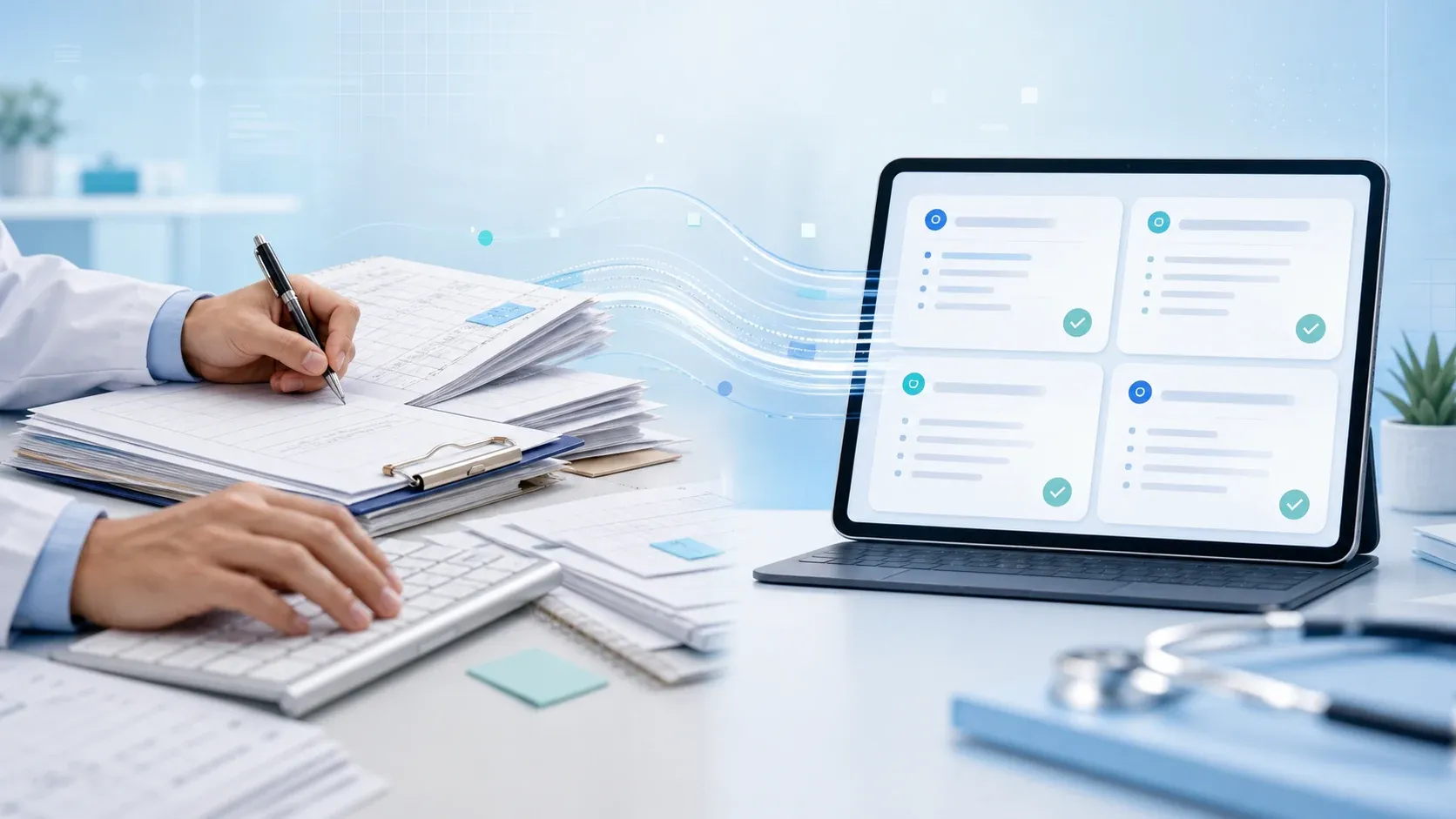
PDF medical summarization transforms how practices handle documentation that exists outside live encounters. Advanced platforms now process uploaded PDFs such as referral letters, discharge summaries, specialist reports, and imaging studies, and generate structured summaries that clinicians can review far more quickly than manual document review.
Here’s where the value shows up in practice:
Pre-Visit Chart Review
Utilize pre-visit chart preparation to upload patient records before complex appointments. Receive concise summaries highlighting relevant diagnoses, current medication, recent test results, and specialist recommendations.
Referral Processing
Instead of reading eight-page letters to find one recommendation, physicians receive structured summaries showing the primary diagnosis, recommended treatment changes, follow-up timeline, and immediate red flags.
Easy Patient Intake
New patient onboarding means reviewing extensive histories from previous providers. PDF medical summarization creates organized summaries of past conditions, surgical histories, medication trials, and allergies, giving physicians comprehensive context without manual document review.
Chart Review Automation
For complex patients managed across multiple specialists, chart review automation consolidates fragmented information into a unified clinical picture that is accessible during visits without switching between dozens of documents.
What Makes PDF Summarization Clinically Defensible
The difference between useful and risky automation lies in verification. Effective automated clinical documentation platforms don't just generate summaries, but they also provide tools to verify accuracy.
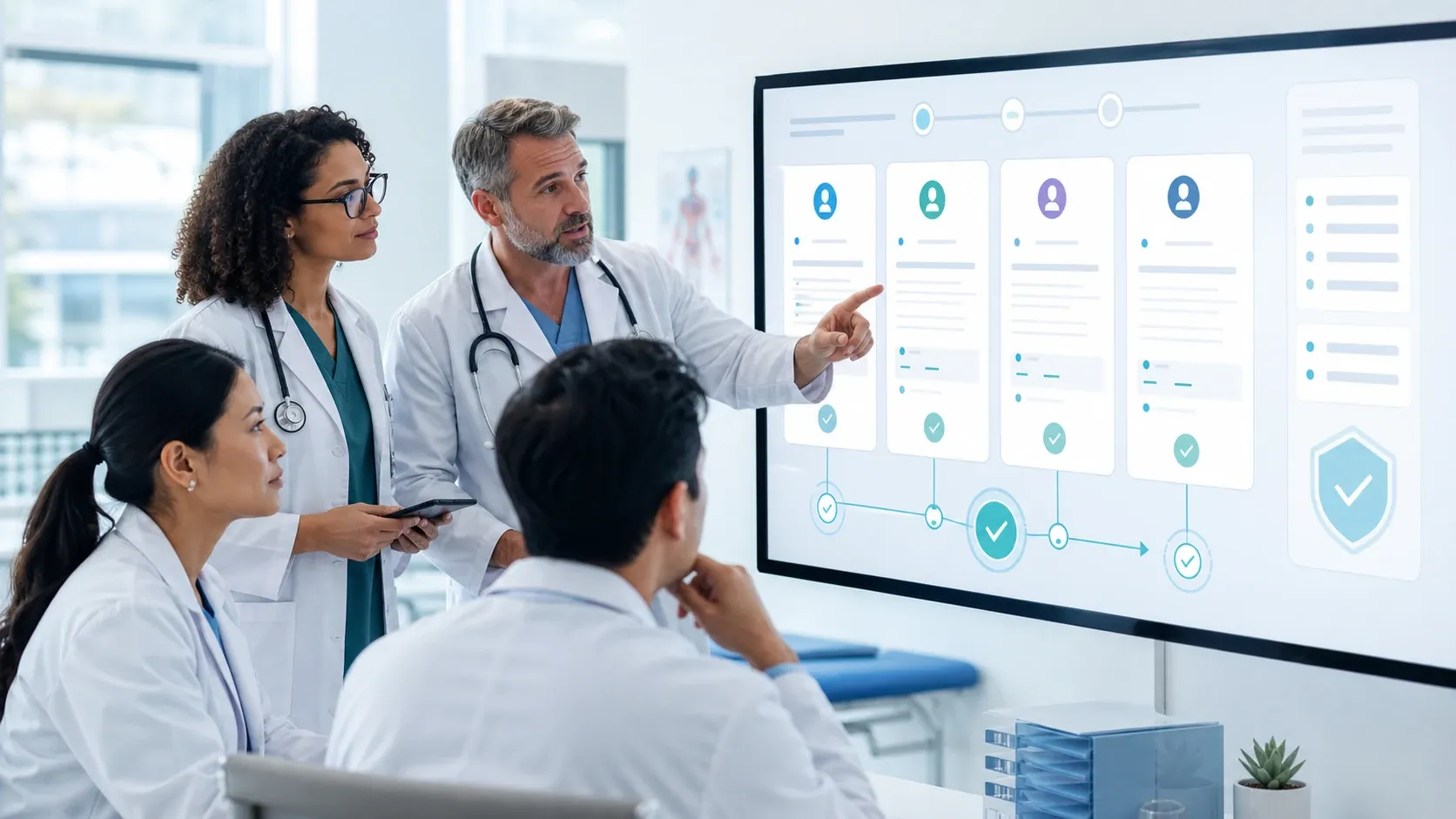
Side-by-Side Verification
The AI-generated summary displays alongside the source document. Physicians review both simultaneously, ensuring nothing critical was missed or misrepresented.
Confidence Scoring
Confidence scores reflect how reliably content has been converted from the original PDF or image into readable text. They do not evaluate whether a symptom, diagnosis, or medication is clinically correct. Instead, they indicate how cleanly the information was extracted from the source document.
For example:
- A 99% confidence score for a documented symptom means the text was clearly extracted from the source file and likely requires minimal verification against the original.
- A 68% confidence score for an allergy medication suggests the extraction may have been affected by factors like scanned images, unusual formatting, or low-quality text, so that section should be quickly reviewed alongside the source document.
This helps clinicians focus their attention where it’s actually needed.
Click-to-Source Traceability
Click any section of the summary and jump directly to its source. No black-box outputs and no guessing where the information came from, as it shows the exact point of origin.
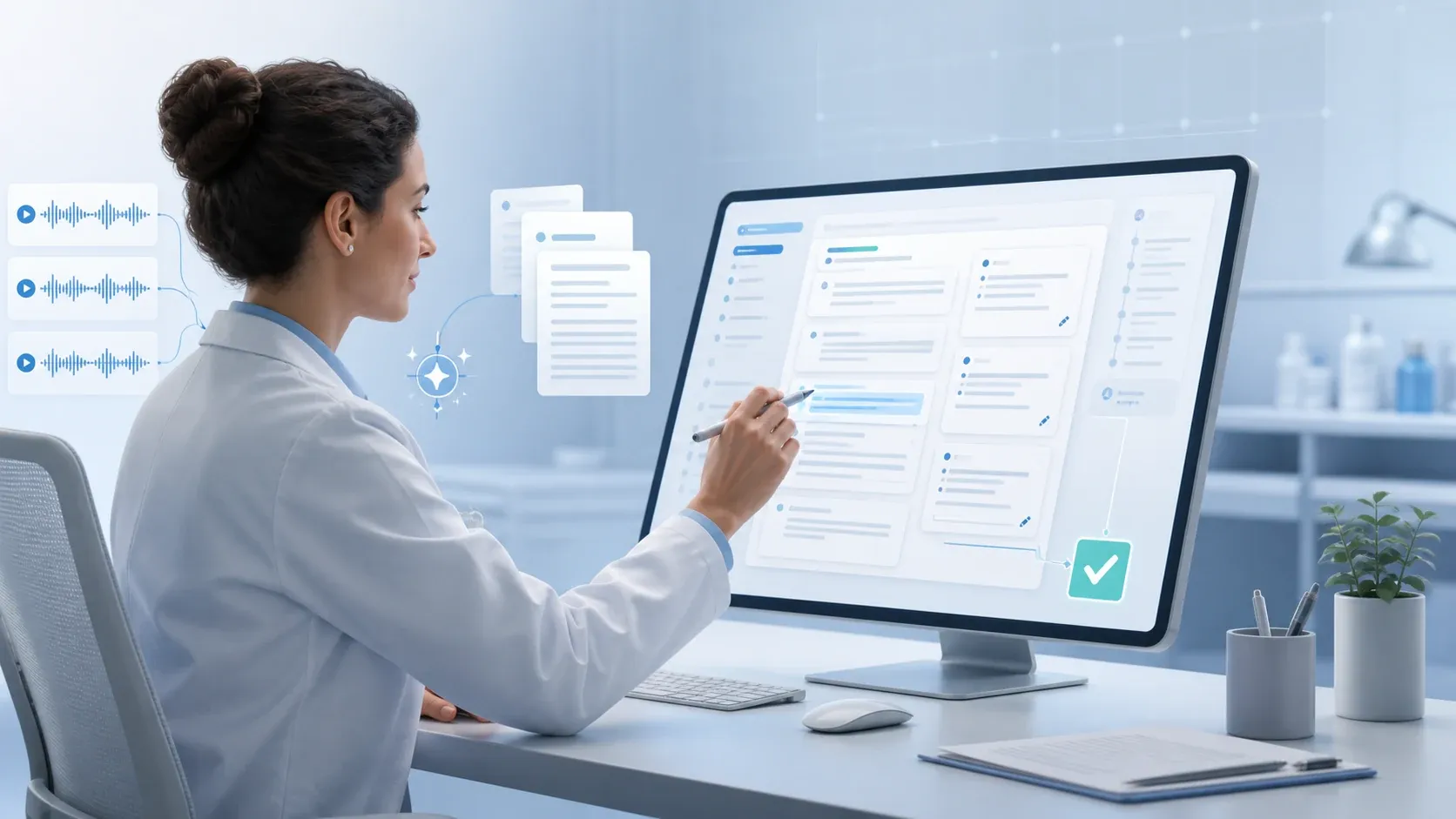
Clinician Verification Requirement
AI accelerates information processing while physicians remain responsible for accuracy and clinical interpretation. This human-in-the-loop design ensures professional accountability and regulatory compliance throughout.
How Audio and PDF Automation Work Together
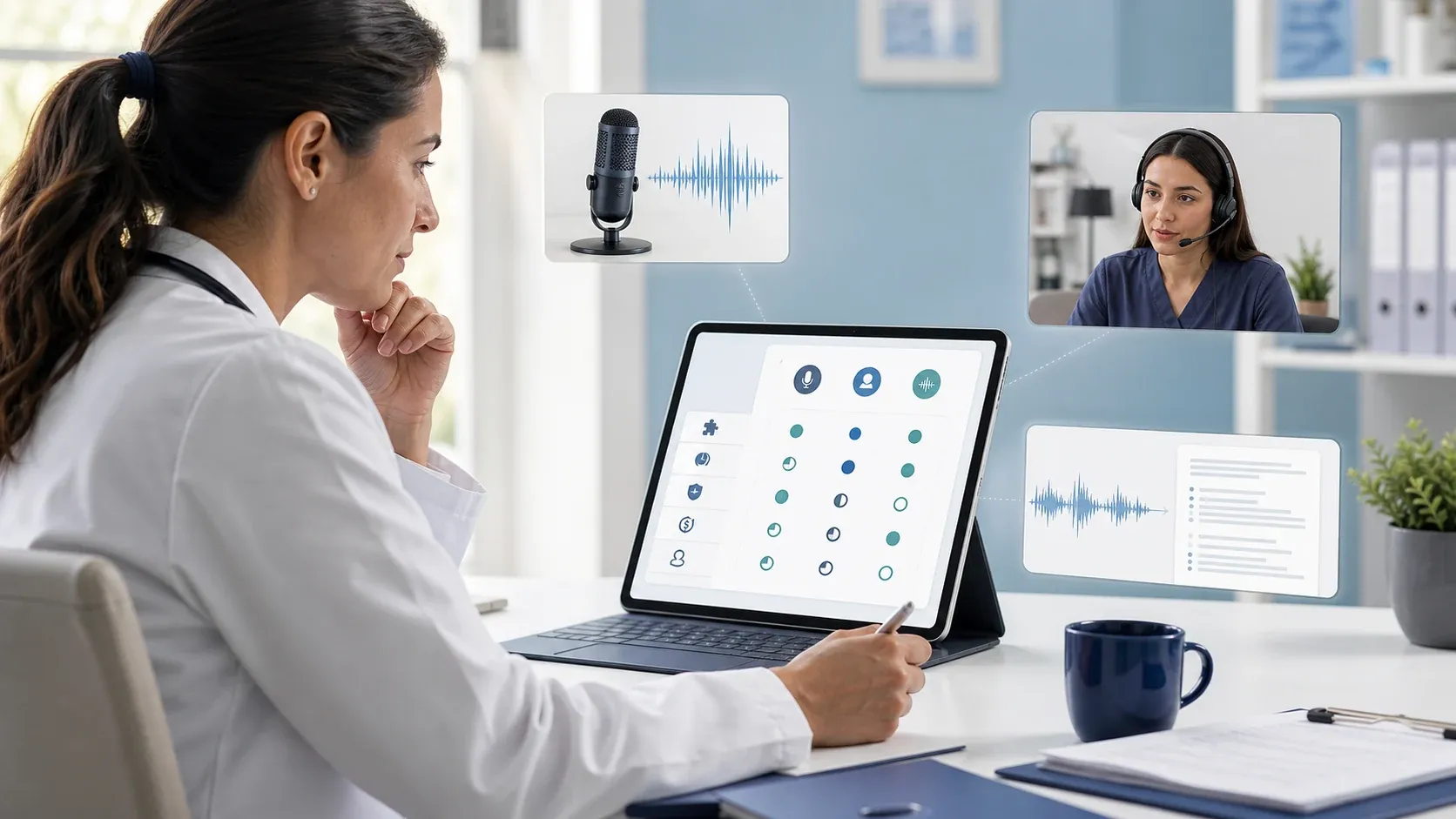
The real workflow optimization happens when dictation and PDF medical summarization integrate seamlessly.
Before the visit: Physician uploads the referral letter, previous notes, or recent test results to generate automated SOAP notes from PDFs. AI generates a structured summary highlighting why the patient was referred, what was tried, and current medications.
During the visit: Ambient AI captures the conversation, documenting history, findings, and clinical reasoning.
After the visit: Physician reviews AI-generated visit note alongside the pre-visit summary, ensuring recommendations align with referral context and previous treatments. Both documents undergo verification before finalization.
This transforms automated clinical documentation from a transcription tool into a complete workflow solution, saving time before, during, and after encounters, not just during dictation.
Moving Beyond One-Dimensional AI
Automated clinical documentation has evolved beyond simple dictation. The practices gaining the most value in 2026 recognize that clinical workflows involve processing existing documentation just as much as creating new notes.
When evaluating AI documentation platforms, Othisis looks beyond audio transcription capabilities. Ask: "Can this system help me process the 30-page specialist report sitting in my inbox?" "Does it provide traceability so I can verify summarized information?" "Will it save time before appointments, not just after?"
The hidden value isn't in replacing one manual task with automation, it's in addressing the full spectrum of documentation burden that makes clinical practice unsustainable.