
Othisis Medtech
SECURITY & COMPLIANCE

Built for Trust,
Designed for Compliance

Clinical documentation demands trust. Othisis is designed with strict safeguards to protect patient information, preserve clinician autonomy, and ensure regulatory alignment across healthcare environments.

Security is foundational, not an add-on feature, built into every layer of the platform.
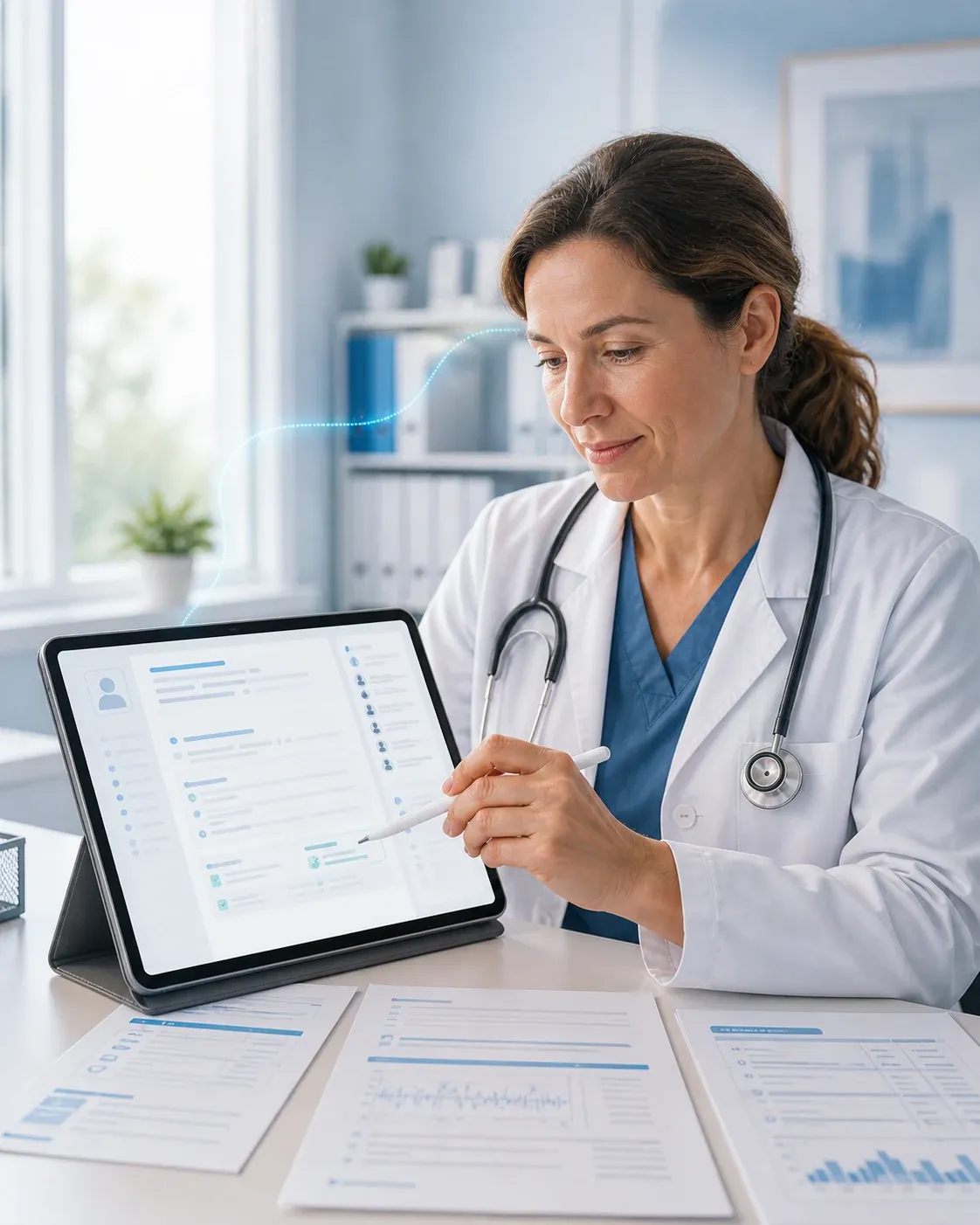
Clinician reviewing a draft clinical note on a tablet, with printed patient records on the desk

Clinical Data Privacy Is
Non-Negotiable

Patient safety must never be compromised by documentation data

Institutional trust depends on how patient information is handled

Regulatory compliance is required across every layer of the platform

Malpractice exposure rises sharply when documentation security fails

Transparent Data Flow

Capture
  • Audio input is processed securely for documentation generation
  • Data transmission occurs over encrypted channels (TLS 1.2+ standards)
  • All processing is purpose-bound to documentation workflows
Processing
  • Structured notes are generated within encrypted environments
  • Only the minimum data required is stored, aligned with the HIPAA Minimum Necessary Standard
  • Encounter notes, summaries, configuration settings, and audit metadata are retained
Storage
  • Storage occurs within compliant cloud infrastructure aligned with HIPAA Security Rule safeguards
  • Practices retain full data ownership, access control, and export rights at any time
  • Never sold, shared with advertisers, or used for marketing purposes

How Othisis Supports Clinician
Trust & Control

Othisis operates under a strict clinician-in-the-loop model. Every note:

Can be edited, modified, or rejected
Is never auto-published to an EHR without physician oversight

AI assists. Clinicians decide.

Trust & Governance by Design

Othisis operates strictly as a documentation support system:

  • Does not diagnose conditions or recommend treatments independently
  • Does not replace physician judgment or operate without clinician review
  • Captures and structures clinician–patient conversations only

Othisis supports clinical reasoning, it does not perform it.

Data handling is built on minimization and ownership:

  • Stores only encounter notes, summaries, settings, and audit metadata, nothing more
  • Practices retain full data ownership, access control, and export rights
  • Never sold, shared with advertisers, or used for marketing

Model development follows strict privacy-preserving practices:

  • Customer clinical data is never used to train AI models
  • Training relies on synthetic and de-identified datasets
  • Specialty benchmarking, drift detection, and human-in-the-loop validation

Layered protections secure every layer of the platform:

  • Encryption in transit and at rest, with multi-factor authentication
  • Role-based access controls and infrastructure isolation
  • Continuous monitoring and full system access logging

Alignment spans regulatory, contractual, and specialty-specific needs:

  • Aligned with HIPAA, HITECH, and applicable state privacy laws
  • Business Associate Agreements (BAAs) supported where applicable
  • Defined data processing agreements, retention timelines, and secure offboarding
  • Engineered for high-risk specialties: cardiology, oncology, behavioral health, emergency medicine

Start Securely with Othisis

We do not resell data, and we do not use customer clinical information to train our models. Your data stays yours.

See plans and pricing Request Demo

Frequently Asked Questions

Your practice retains full ownership of all clinical data generated using Othisis.

Othisis operates strictly as a data processor. We do not claim ownership of patient records, encounter documentation, or structured outputs created within the platform. Your organization controls access, retention policies, and data export decisions at all times.

No.

Othisis does not use identifiable patient data, clinician notes, or customer documentation to train its AI models.

Model development and improvement rely on privacy-preserving approaches such as synthetic data, structured benchmarking environments, and de-identified datasets where legally permissible. Customer clinical data remains within the customer-controlled environment and is never repurposed for model training.

No.

Othisis is designed as a clinical documentation support system, not a diagnostic engine, treatment recommendation tool, or autonomous clinical decision-maker.

It captures and structures clinician–patient conversations to assist with documentation efficiency. All medical decisions remain entirely under physician control. Because it does not provide diagnostic outputs or independent clinical recommendations, it does not function as a regulated medical device.

Othisis is designed to align with the requirements of the Health Insurance Portability and Accountability Act (HIPAA), including the Privacy Rule and Security Rule safeguards.

This includes:
- Encryption in transit and at rest
- Role-based access controls
- Access logging and monitoring
- Administrative safeguards
- Secure infrastructure practices

Compliance is approached as an architectural principle, not a marketing claim.

Yes.

Othisis supports Business Associate Agreements (BAAs) with covered entities and healthcare organizations, as required under HIPAA. BAAs clearly define responsibilities related to Protected Health Information (PHI), security safeguards, and breach notification procedures.

Yes.

Othisis operates under a strict clinician-in-the-loop model.
All AI-generated documentation:
- Is reviewable before finalization
- Can be edited or modified
- Requires clinician approval before becoming part of the medical record
No note is automatically finalized or submitted without physician oversight. The clinician remains the final author and decision-maker.

Othisis is hosted within secure, compliant cloud infrastructure environments that support healthcare-grade security controls.

Data hosting environments are selected to align with regulatory requirements and enterprise security standards. Infrastructure details can be shared during due diligence or procurement review processes.

Othisis uses industry-standard encryption practices, including:
- Encryption in transit using secure TLS protocols
- Encryption at rest within protected storage environments
- Strict access controls and authentication safeguards

Encryption safeguards are implemented to protect clinical data throughout transmission and storage.

Your organization retains control of its data.

Upon termination:
- Data can be securely exported in agreed formats
- Retention timelines follow contractual terms
- Data can be securely deleted in accordance with agreement requirements

There are no hidden retention practices beyond contractual obligations. Offboarding procedures are documented and structured to ensure continuity and security.

High-risk specialties such as cardiology, oncology, behavioral health, and emergency medicine require heightened documentation defensibility.

Othisis supports these environments by:
- Preserving structured clinical language
- Capturing risk assessments clearly
- Supporting time-based billing documentation
- Maintaining traceability and review controls
- Operating under a clinician-in-the-loop model

The system strengthens documentation integrity without interfering with clinical decision-making.

AI assists with structure and efficiency. Clinicians retain authority and responsibility.