

Ambient Documentation in Internal Medicine: When the Problems Aren't Separate
The Short Version
A cardiology visit goes deep on one system. A family medicine visit is often wide, covering several different concerns in one appointment. Internal medicine has a different problem. The patient often has three or four chronic conditions, and those conditions affect each other. Diabetes changes how you treat heart failure. Kidney function changes which blood pressure medication is safe. Ambient documentation has to capture each condition and how they are connected, because that connection is usually the reason for the visit.
Why Internal Medicine Isn't a Breadth Problem or a Depth Problem
Family medicine documentation is hard because one visit can touch five different concerns. Cardiology documentation is hard because one condition needs a lot of detail. Internal medicine is hard in a third way. Family physicians manage patients with multiple conditions too, but in internal medicine that is the center of most visits.
An internal medicine patient with diabetes, hypertension, and chronic kidney disease isn't dealing with three separate problems. Those conditions shape each other's treatment. A medication that helps the heart might strain the kidneys. A drug that controls blood sugar might need a lower dose once kidney function drops. The physician is reviewing one patient, and every decision has to account for the other conditions in the room.
That is what sets internal medicine documentation apart. The conditions form one picture, and the note has to record it that way. A note that lists "diabetes: stable, hypertension: stable, CKD: stable" without recording how a change in one affects the others is of little use the next time someone opens the chart.
What Pre-Visit Prep Needs to Show for a Multimorbidity Patient
An internal medicine pre-visit summary needs to put the patient's documented conditions, medications and results in one place, so the physician is not paging through faxed records before the visit.
A useful summary for this kind of visit includes:
- Allergies, with the reaction where the record gives one
- Active medications, with dose, route and frequency as the record states them
- Active problems, as the treating providers documented them
- Lab and imaging results listed with their dates (A1c, eGFR, blood pressure readings, ejection fraction, whatever the record holds)
- Both versions where two documents disagree, such as two doses for the same drug
Two limits matter as much as the content. The summary should list values with their dates and leave the direction to the physician, without labeling anything as improving or worsening. It should also keep "the record says no known allergies" apart from "the record doesn't mention allergies." Those are different facts, and for a patient on several medications the difference matters.
How an AI Scribe Should Handle a Visit About Interacting Conditions
During the visit, the conversation usually moves back and forth between conditions. A physician might mention a kidney function change while discussing the diabetes plan, then return to it five minutes later when discussing blood pressure medication. A transcript that captures the words in order misses that those two moments are about the same issue.
A scribe does not make that connection for the physician, and it should not try. Its job is to record the assessment and plan exactly as the physician stated them. When the physician says the dose is coming down because kidney function has dropped, the note records the change and the reason together. When the reason goes unsaid, the note has only the new dose.
That makes one habit worth keeping in these visits: say the connection out loud. A sentence like "I'm lowering this because of your kidney numbers" puts the reasoning in the note, where the next clinician can read it.
What an Internal Medicine Physician Should Still Check Before Signing
A missed connection costs more here than in a single-topic visit. If a draft note treats three interacting conditions as three separate items and the physician reviews quickly, both the draft and the review can miss the link.
Worth checking specifically:
- Does the note show that a change in one condition affected the plan for another, or does it list three unrelated updates?
- Is each medication change recorded with the reason the physician gave for it, or as a new dose with no context?
- If a lab value matters for a condition other than the one being discussed, is that reflected? A scribe records what was said in the room. It will not flag a threshold nobody mentioned.
- If the record and the patient give different doses or allergies, does the note show both instead of picking one?
- Does the plan section reflect the tradeoffs that were discussed, or a generic next step for each condition?
A scribe that traces each part of the note back to its place in the transcript makes this check faster. The physician can go straight to where a connection was or wasn't captured instead of re-reading the whole visit.
From Appointment to Billing: Where the Note Sits
The note is one step in a longer chain. For a patient with interacting conditions, the steps before and after it decide whether those connections reach the chart and the claim.
- Appointment. The visit is booked with enough time for several conditions, and the reason for the visit is recorded.
- Records. Recent labs, specialist notes, and discharge summaries are uploaded and summarized before the visit.
- Pre-visit summary. The physician reads allergies, medications, problems and dated results in one brief.
- Visit. The conversation is captured as it happens, including the reason the physician states for each change.
- Draft note and codes. The draft records the assessment and plan as stated, and ICD-10 codes are suggested from the conversation.
- Review and sign. The physician edits the note, confirms the codes, and signs.
- Billing. The confirmed codes go to billing with the signed note behind them.
Why the appointment step matters
A short slot booked as a "follow-up" hides what the visit is for. When the booking records the reason for the visit, staff can request and upload outside records ahead of the day, and the pre-visit summary is ready before the physician walks in. A missing eGFR result or cardiology note is easier to chase at booking than during the visit.
Why the billing step matters
Billing depends on the same connections the note has to capture. Office visit levels are selected by medical decision making or total time, and decision making counts the number and complexity of problems addressed (AMA table of medical decision making). A note that records one of three conditions managed understates the visit.
Diagnosis coding works the same way. ICD-10-CM diabetes codes are combination codes, so type 2 diabetes with diabetic chronic kidney disease is reported as E11.22, with a second code for the CKD stage (ICD-10-CM Official Guidelines). The note has to say enough about each condition for the right code to be chosen.
The aim is a note that matches the work done. Suggested codes are a starting point, and the physician or coder confirms them against the signed note.
What a Documentation System Built for Multimorbidity Needs
Internal medicine needs a system that puts several conditions in view at once and carries each connection the physician states into the note.
In practice, that means:
- Pre-visit context that puts allergies, medications, problems and dated results in one brief
- In-visit capture that records each change with the reason the physician gave for it
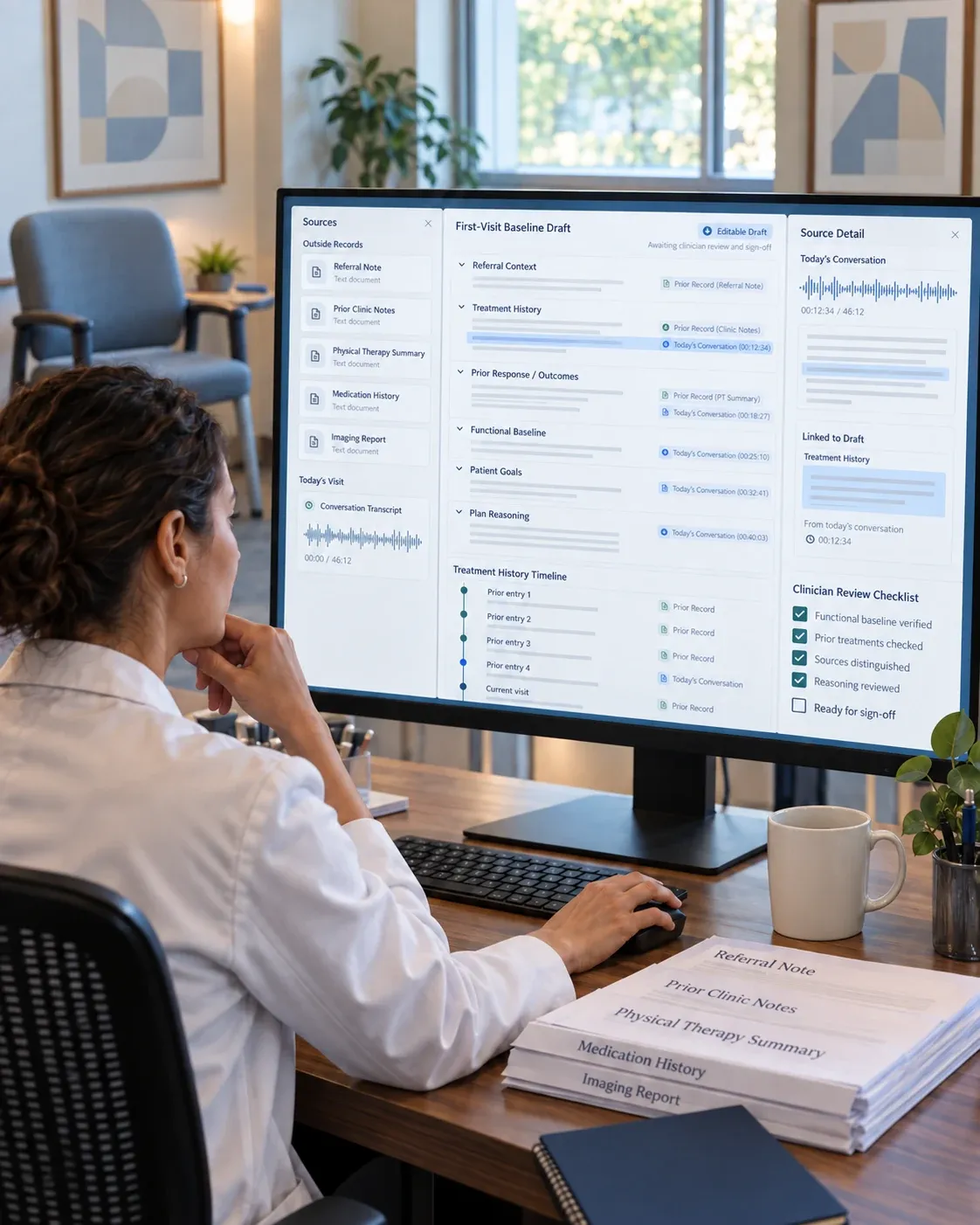
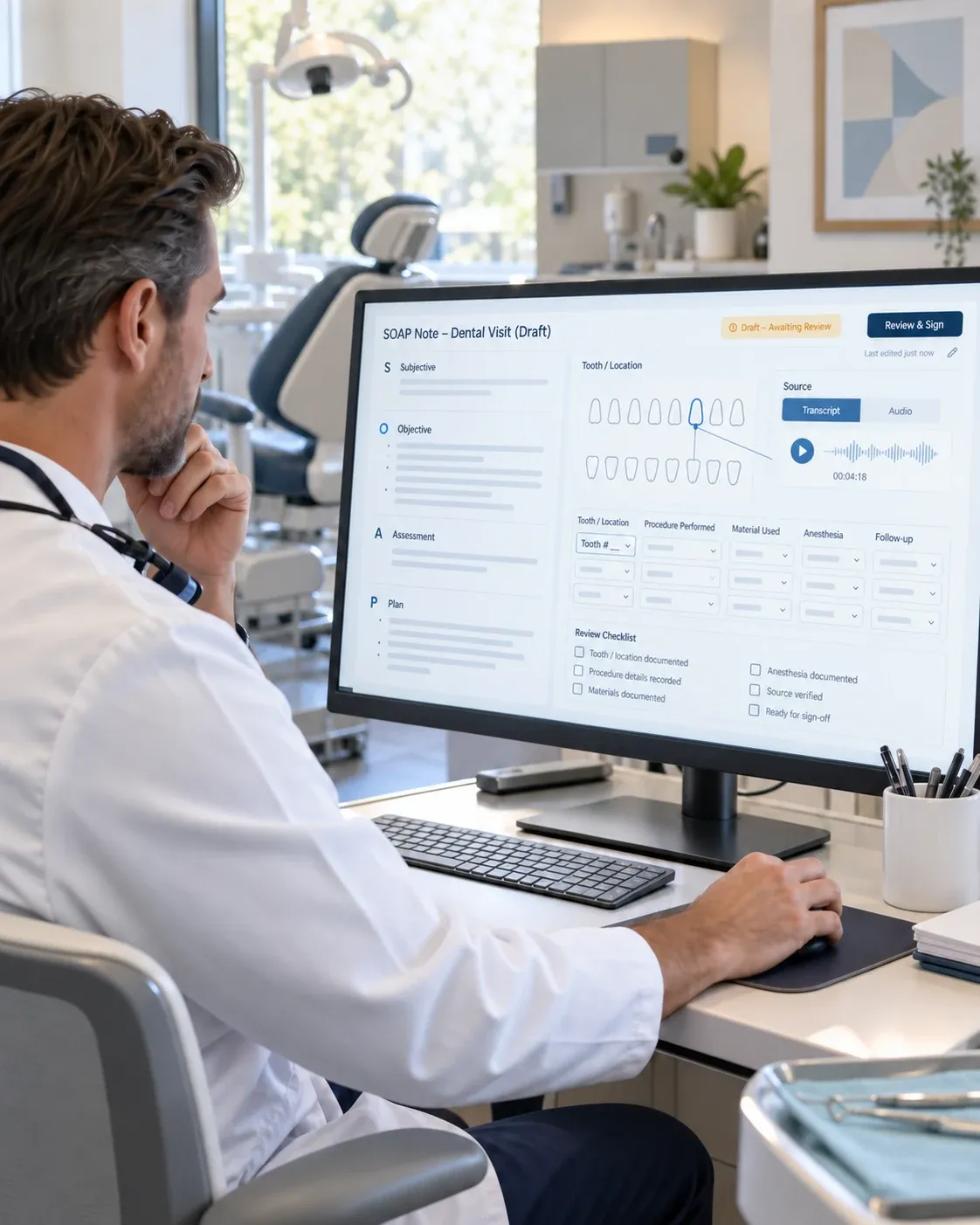
- A draft note that links its clinical statements to their source, so a missed connection is quick to find
For a specialty built around ongoing, interacting chronic disease, the test is whether the connection the physician made is still in the note when the next person opens the chart.
Where This Fits in Othisis
Othisis summarizes the records you upload into a brief of allergies, medications, problems and dated results, and builds the patient profile from those summaries. During the visit, the scribe combines that record summary with the conversation in one draft note. Assessment and plan hold only what the clinician said.
Clinical statements in the draft link back to their source, either the line in the transcript or the page of the original record, so a physician can check a connection without re-reading the visit. See AI Scribe for Internal Medicine for the full page. Every draft stays editable, and a clinician has to review and sign off before anything is final.
Othisis also covers the steps on either side of the note. Appointment scheduling sits in the same system as the patient profile. Each draft comes with suggested ICD-10 codes, each with a confidence score you can trace back to the transcript, and the codes are placed in a field ready to send to billing.
See how it works in a live demo → · Try it →