
The Short Version
A lot of what happens in an eye exam isn't said out loud, it's measured. Visual acuity, eye pressure, a refraction number, findings from imaging. A SOAP note generator built around capturing conversation misses most of the actual content of a vision visit. What matters here is accuracy on numbers, consistency across visits so trends are visible, and correctly separating what the patient reports from what the equipment measured.
Why Vision Clinic Documentation Is Mostly Measurement, Not Conversation
In a lot of specialties, the richest part of the visit is what the patient says. In vision care, a large share of the useful information comes from tests and instruments: visual acuity readings, intraocular pressure, refraction results, imaging findings. The conversation still matters, but it's often shorter than the data.
A vision visit note typically needs to capture:
- Visual acuity in each eye, with and without correction
- Intraocular pressure readings
- Refraction results
- Findings from any imaging or specialized testing
- What the patient reports (blurriness, floaters, pain, changes since last visit)
A documentation system that's tuned for narrative conversation will naturally underweight this kind of numeric, instrument-driven content, because there's less of it to "listen" to in the traditional sense. It has to be built to pull structured numbers accurately, not just transcribe dialogue.
What Pre-Visit Prep Needs to Show for an Ongoing Eye Condition
For a returning patient, especially one being monitored for something like glaucoma or a slowly progressing condition, the most useful pre-visit information isn't a general history. It's the trend.
A useful pre-visit summary for vision care includes:
- Prior visual acuity and pressure readings, in order, so the trend is visible at a glance
- Any medications currently being used for eye conditions
- Findings from the last imaging session, for comparison against today's
- Anything flagged as needing follow-up from the previous visit
Seeing the last few visits' acuity, pressure, and imaging results side by side is often more useful for patient intake than a paragraph summarizing the patient's eye health in general terms.
How a SOAP Note Generator Should Handle an Eye Exam
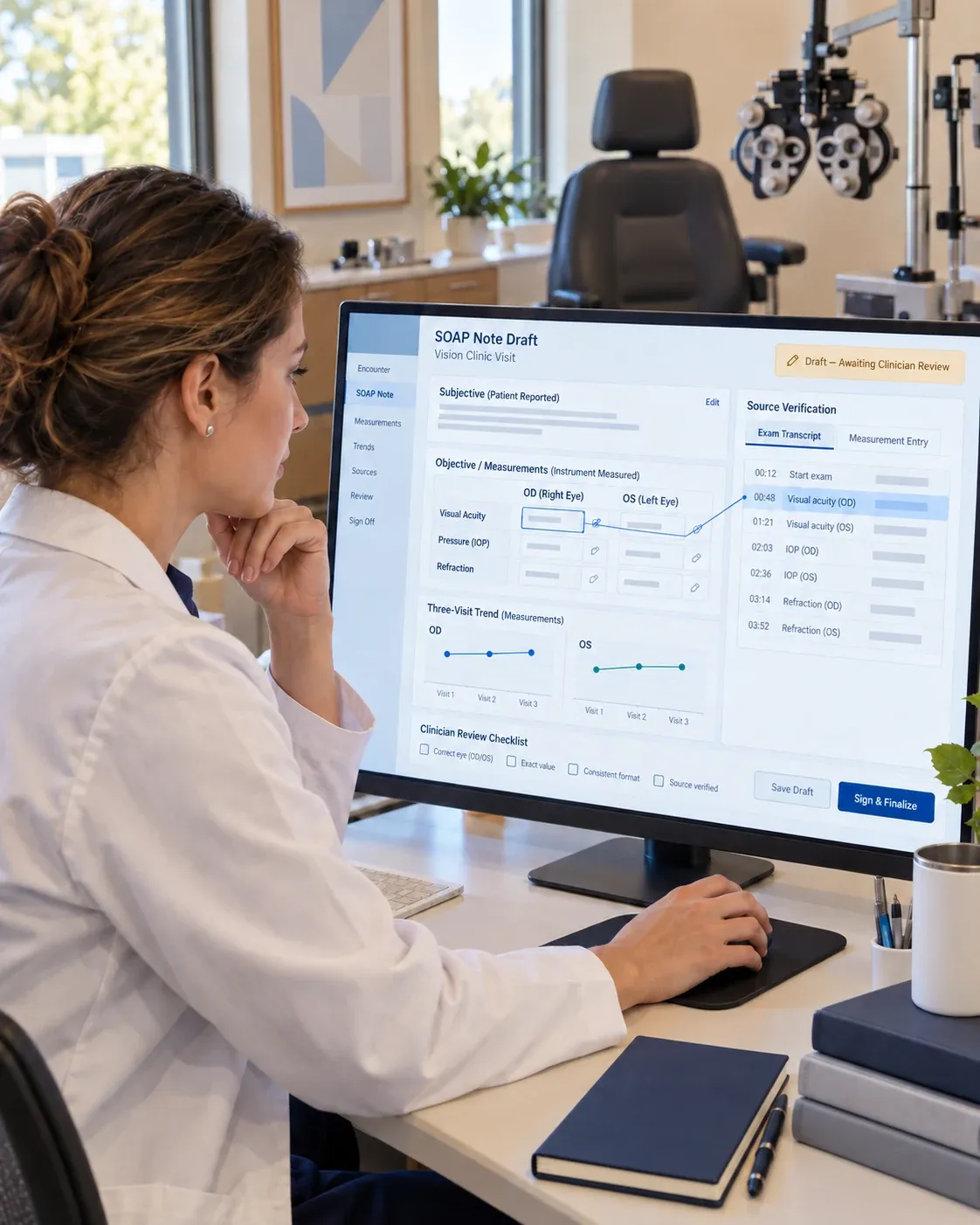
During the visit, the system needs to correctly capture numbers as they're read out or entered, not paraphrase them. A visual acuity reading, a pressure number, a refraction value; these need to land in the note exactly as measured, in the right section, tied to the right eye when relevant.
The note also needs to keep the format consistent across visits, since the value of this kind of documentation comes from being able to compare today's numbers to last time's, and to the time before that. A note that captures the right numbers but formats them differently every visit makes that comparison harder than it needs to be.
What an Eye Care Clinician Should Still Check Before Signing
Numbers are exactly the kind of detail that's easy to get subtly wrong in a draft, a transposed digit, a reading attributed to the wrong eye, a value that's slightly off from what was actually measured.
Worth checking specifically:
- Are visual acuity and pressure readings attributed to the correct eye?
- Do the numbers in the draft match what was actually measured, not a rounded or approximate version?
- Is today's data formatted consistently with prior visits, so trend comparison still works?
- Is anything the patient reported (symptoms, concerns) clearly separated from what was measured?
A system that traces every number back to exactly when and how it was captured makes this kind of check faster, since the clinician can confirm a reading against its source instead of trusting it blind.
What a Documentation System Built for Vision Care Actually Needs
A SOAP note generator built around conversation doesn't automatically handle a specialty where most of the real content is numeric and instrument-driven. For vision clinics, what matters is:
- Pre-visit context that shows trends in acuity and pressure over time, not just a general history
- In-visit capture that gets numbers right and attributes them to the correct eye
- A draft that stays consistently formatted across visits, so comparison actually works
For a specialty built on tracking small changes over time, getting the numbers exactly right matters more than smooth narrative prose.
Where This Fits in Othisis
Othisis is built to capture the kind of structured, numeric documentation vision care depends on; acuity, pressure, and refraction readings recorded accurately and consistently, so trends stay visible visit over visit. See AI Scribe for Vision Clinics for the full page. Every draft stays editable, and a clinician has to review and sign off before anything is final.
See how it works in a live demo → · Try it →