The Short Version
Most SOAP note discussions assume a visit built around conversation: a patient describes symptoms, a clinician asks questions, a plan gets discussed out loud. Dental visits don't usually work that way. A lot of what happens is procedural. The clinician is doing something to a specific tooth, in a specific quadrant, using specific materials, and the note has to reflect that precisely. A SOAP note generator built for talk-heavy visits doesn't automatically work for dentistry. It has to be built around what actually gets said and done in a dental chair.
Why Dental Documentation Doesn't Follow the Usual SOAP Pattern
In a typical medical visit, the Subjective section is where most of the real content lives: what the patient says, what they're worried about, how symptoms have changed. In dentistry, a lot of that gets compressed into a much smaller conversation, and the Objective and Plan sections carry more weight instead.
A dental visit note usually needs:
- The specific tooth or teeth involved, by number
- What was found on exam (a crack, decay, gum recession, whatever applies)
- What procedure was performed, including materials used
- Any anesthesia given, and how much
- What was discussed with the patient about next steps or follow-up care
None of this maps cleanly onto a generic "patient talked, doctor listened" SOAP template. A system built for that pattern will either leave gaps where the procedural detail should be, or force procedural facts into a section they don't belong in.
What Pre-Visit Prep Looks Like for a Procedure-Based Specialty
For a lot of specialties, pre-visit prep is about surfacing history: past visits, chronic conditions, recent labs. For dentistry, the more useful pre-visit information is often narrower and more specific:
- Prior work on the same tooth or area
- Known allergies, especially to anesthesia or specific materials
- Outstanding treatment plans from previous visits
- Insurance or billing notes relevant to the procedure being done
A dental hygienist or dentist walking into an appointment mostly needs to know: what's the history on this exact tooth, and is there anything from last time that still needs finishing.
How a SOAP Note Generator Should Handle a Dental Visit
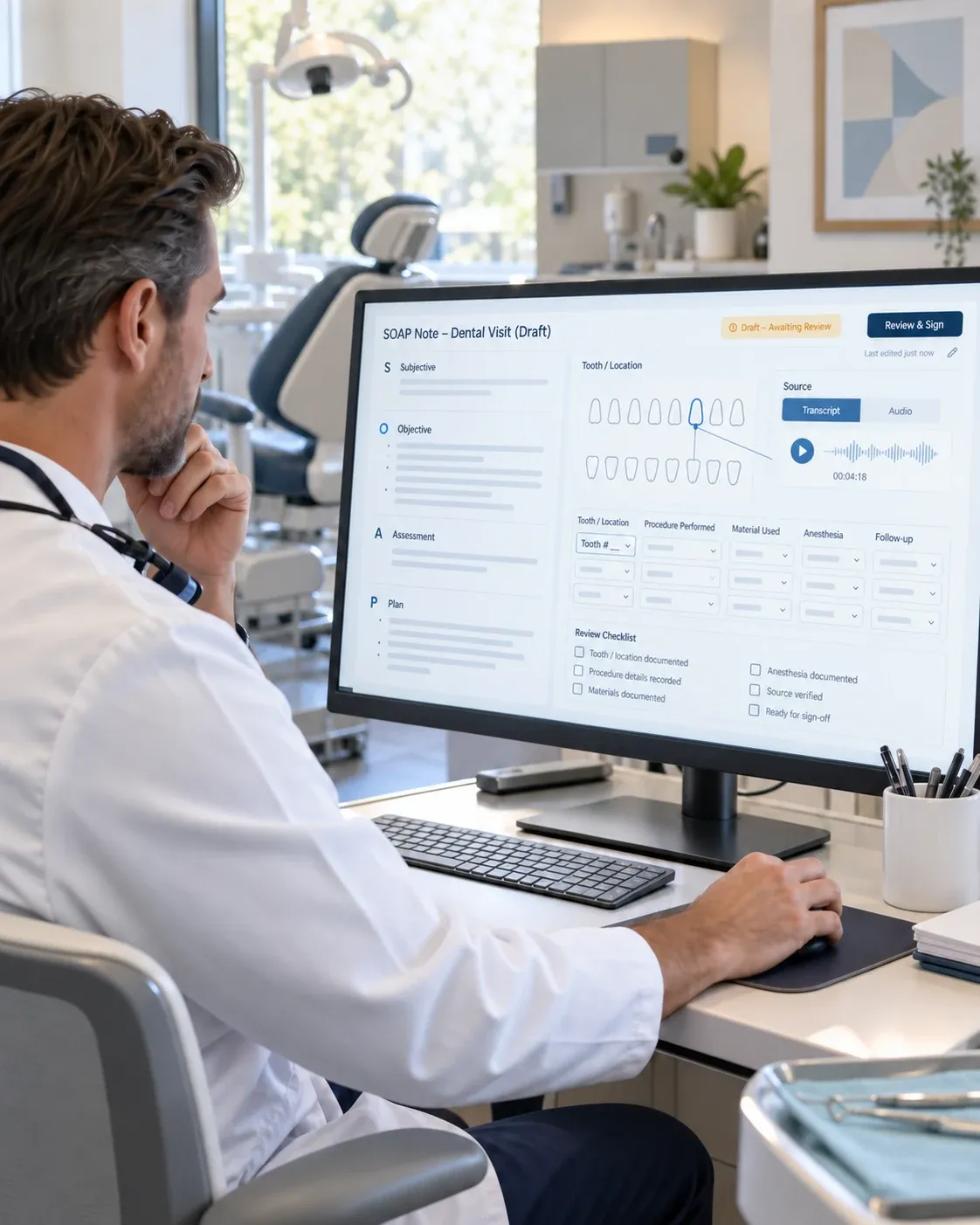
During the visit, a good system needs to correctly separate what's being described from what's being done. "The patient reports sensitivity to cold on the upper right" is subjective. "Tooth #3 shows a fractured cusp on exam" is objective. "Composite filling placed, tooth #3" is treatment, which in a dental context often needs its own clearly marked section rather than getting buried inside a generic plan paragraph.
The note also needs to capture tooth numbers and procedure codes accurately, since a dental note that's vague about which tooth was treated isn't just incomplete, it's a real documentation risk. Getting the tooth number wrong, or leaving it out, is the kind of small error that causes real problems later, whether that's insurance, a future visit, or a legal record.
What a Dentist Should Still Check Before Signing
A draft note from an AI scribe is still a draft, and in dentistry the specific numbers matter more than they do in some other specialties.
Worth checking:
- Is every tooth number correct and specific, not vague ("upper right" instead of the actual tooth number)?
- Does the procedure description match what was actually billed or coded?
- Are materials and anesthesia dosages recorded accurately?
- If multiple teeth were treated in one visit, is each one documented separately rather than blended together?
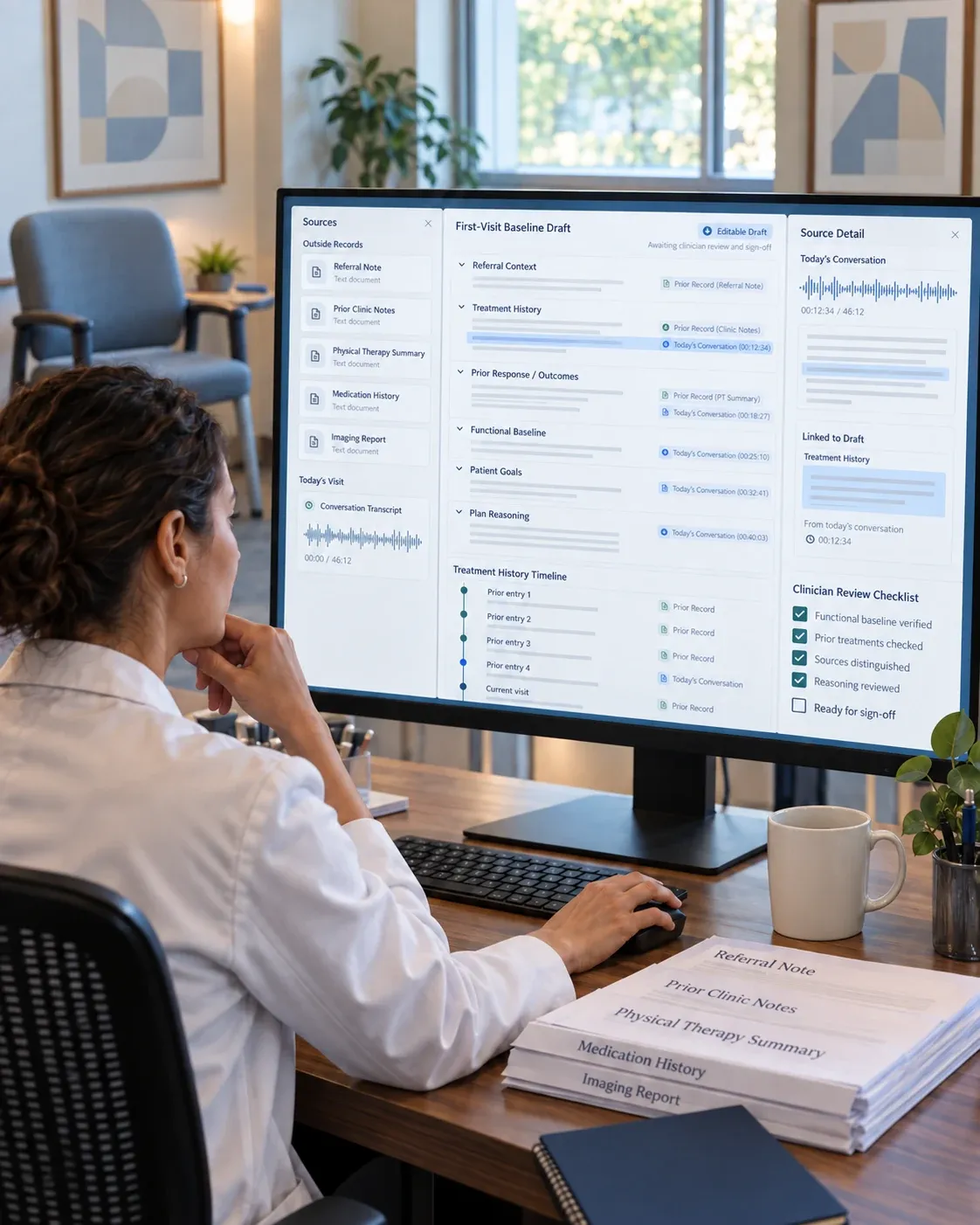
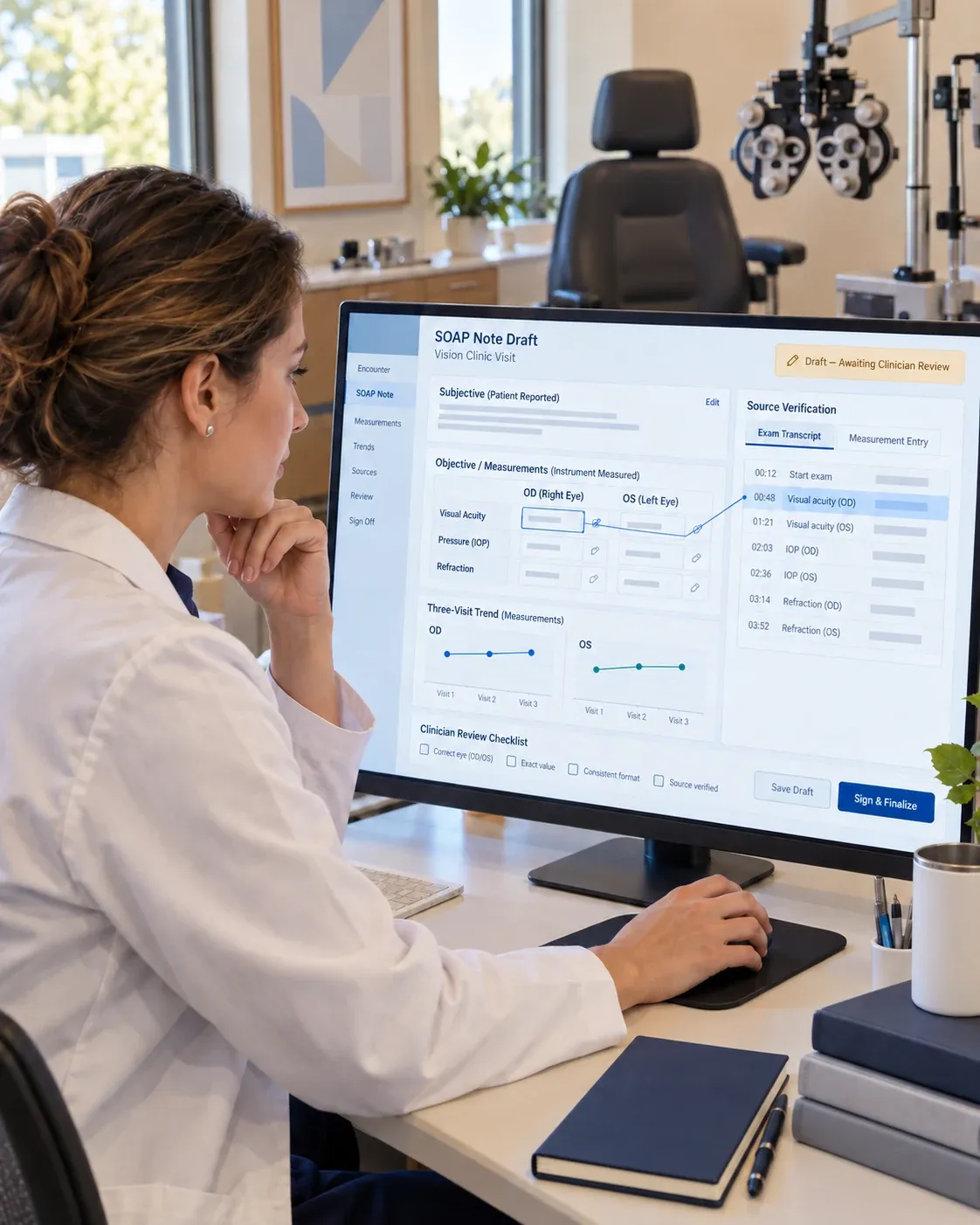
A system that links each part of the note back to the moment it was said or done makes this check faster, since the dentist can jump straight to the tooth in question rather than re-reading the whole visit to confirm.
What a Documentation System Built for Dentistry Actually Needs
A SOAP note generator that works well for a talk-heavy specialty doesn't automatically work for one that's procedure and code-driven. For dentistry, what actually matters is:
- Pre-visit context focused on tooth-specific and procedure-specific history
- In-visit capture that correctly separates what's described from what's performed
- A draft that gets tooth numbers, procedures, and materials right, not just the general gist of the visit
For a specialty where a single wrong tooth number can cause real problems, precision matters more than narrative smoothness.
Where This Fits in Othisis
Othisis is built to capture dental visits with the specificity dentistry actually needs; tooth numbers, procedures, and materials organized clearly, not folded into a generic narrative note. See AI Scribe for Dentistry for the full page. Every draft stays editable, and a dentist has to review and sign off before anything is final.
See how it works in a live demo → · Try it →