
The Short Version
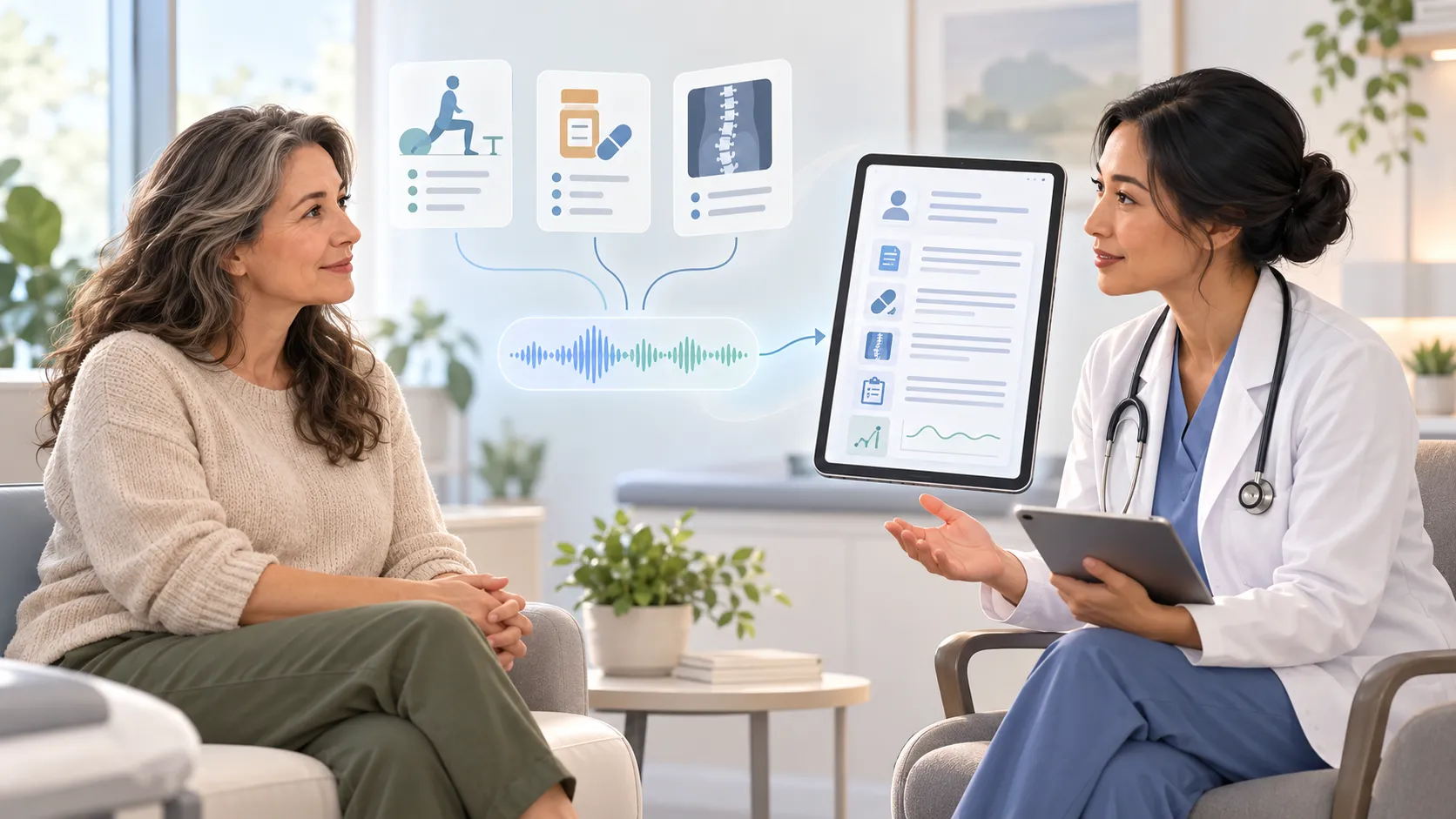
Most new pain management patients show up with a history already in progress. Prior physical therapy notes, medication trials, sometimes years of them, usually from more than one provider. The intake visit has to absorb all of that and still leave time for the patient to actually talk. Ambient documentation built for a routine follow-up doesn't automatically handle this well. It has to be built around the fact that the first visit is doing two jobs at once: catching up on everything that came before, and capturing what happens in the room today.
Why the First Visit Looks Different From Every Visit After It
A returning pain management patient's visit is mostly about what changed since last time. A new patient's first visit is different. The clinician is trying to build a full picture from scratch, often from records that arrive as a stack of PDFs or faxes from somewhere else entirely.
That first visit usually needs to establish:
- What's been tried already: Physical therapy, medication trials, and how the patient responded to each
- A functional baseline: what the patient can and can't do right now, not just a pain score
- The reasoning that led to this appointment, including anything flagged by a referring provider
- What the patient expects from treatment, in their own words
None of this is available in the conversation alone. A lot of it lives in records the patient brings with them, and reconstructing it by hand before the visit even starts is exactly the kind of task that eats into a clinician's morning.
What Pre-Visit Prep Looks Like for a New Patient
For a returning patient, pre-visit prep means checking what happened last time. For a new pain management patient, it means something closer to assembling a file from scratch:
- Prior injection dates and which joints or sites were treated
- Physical therapy records and whether they showed improvement
- Medication trials, including what didn't work and why it was stopped
- Imaging and referral notes from whoever sent the patient over
When that material arrives as a folder of outside documents, someone still has to read through it and pull out what matters before the appointment starts. That's a real chunk of pre-visit time that has nothing to do with the actual visit yet.
How Ambient Documentation Should Handle the Intake Conversation
Once the visit starts, the conversation itself is dense. A new patient is usually explaining months or years of history in one sitting: what hurt, when, what was tried, what helped a little and what didn't help at all. Capturing that ambiently means the clinician can ask the next question instead of writing down the last answer.
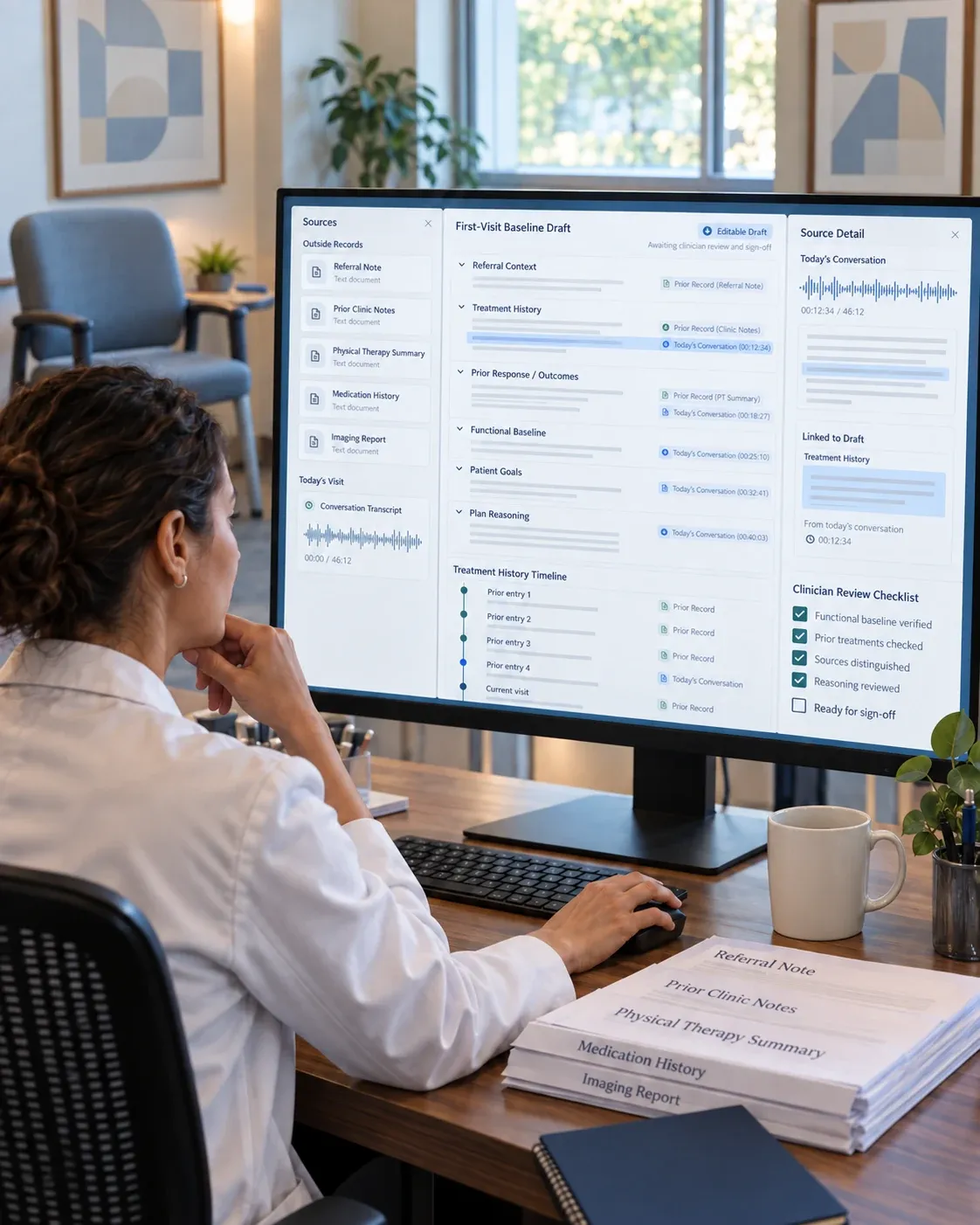
The note that comes out the other side needs to read as a baseline, not a transcript. Functional status, treatment history, and the clinical reasoning for what happens next all need to land in the right place, organized the way a pain management note is expected to read, not just recorded in the order the patient happened to say things.
What a Clinician Should Still Check Before Signing
A drafted intake note is still a draft, and on a first visit the stakes for getting the history right are higher than usual, since everything that follows builds on it.
Worth checking:
- Does the functional baseline match what the patient actually described, not a generic summary of "chronic pain"?
- Are prior treatments and their outcomes captured accurately, including the ones that didn't work?
- Does the reasoning for today's plan connect clearly to what came before, rather than reading as a fresh start that ignores the history?
- If outside records were reviewed, is it clear which parts of the note came from those records versus today's conversation?
A system that links each part of the note back to where it came from, the conversation or a specific outside document, makes this check faster, since the clinician can confirm a detail instead of hunting for it.
What a Documentation System Built for Pain Management Onboarding Actually Needs
An ambient documentation tool built for a five-minute follow-up doesn't automatically hold up for a first visit that has to absorb years of history in one sitting. For a pain management intake, what actually matters is:
- Pulling relevant facts out of prior records before the visit starts, not leaving that to the clinician
- Capturing a dense, backward-looking conversation without losing the thread
- Producing a baseline note organized the way pain management documentation is expected to read
For a specialty where the first note becomes the reference point for every visit after it, getting the baseline right matters more than getting it fast.
Where This Fits in Othisis
Othisis is built to handle a pain management patient's first visit the way it actually happens: a stack of outside history to absorb, and a dense conversation to capture without losing the thread. See AI Scribe for Pain Management for the full page. Every draft stays editable, and a clinician has to review and sign off before anything is final.
See how it works in a live demo → · Try it →