
The Direct Answer
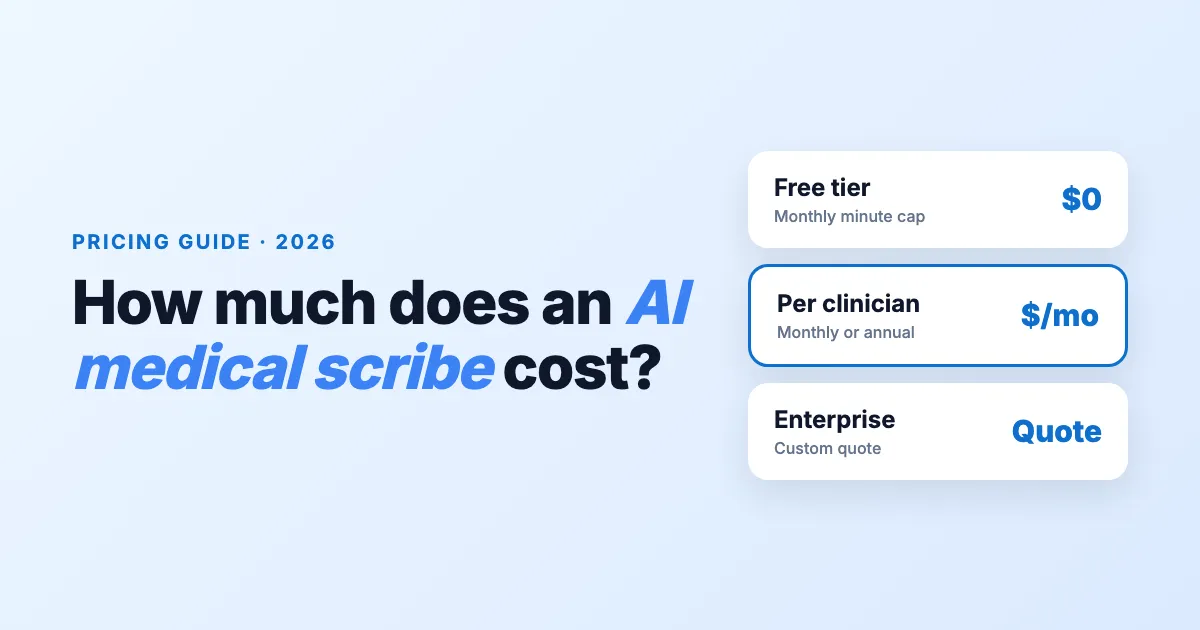
Most AI medical scribes are sold as a monthly subscription per clinician, with limits on how many minutes of audio or how many documents you can process. Many vendors also offer a free tier with a smaller monthly allowance, and larger groups usually get a custom quote. The number on the pricing page is only part of the cost, though: the time clinicians spend reviewing drafts, the setup work, and the compliance paperwork all count.
For reference, here is what Othisis costs today:
| Plan | Price | Transcription | PDF summarization |
|---|---|---|---|
| Starter | Free, no credit card | 180 minutes per month | 25 pages per month |
| Basic | $149 per month, or $1,490 per year | 9,000 minutes per month | 500 pages per month |
| Pro | $249 per month, or $2,490 per year | Unlimited | 1,000 pages per month |
| Enterprise | Custom | Includes a booking screen on your own website and patient emails. Contact us. | |
Annual billing gives you two months free. Every plan includes clinical notes, patient handouts, referral and insurance letters, color-coded ICD-10 confidence levels, traceability to the transcript, version history and the mobile app. Pro adds priority support with a 24-hour response. See the pricing page for the current details.
The Four Pricing Models You Will See
| Model | How it works | Watch for |
|---|---|---|
| Per-clinician subscription | A flat monthly or annual fee for each clinician who uses the tool. | Whether the fee covers every feature, or whether letters, coding support and record summaries cost extra. |
| Usage tiers | Plans are separated by minutes of audio or pages of documents per month. | What happens when you hit the cap: overage fees, a hard stop, or an automatic upgrade. |
| Free tier | A no-cost plan with a small monthly allowance, meant for evaluation or very low volume. | Whether the free plan is usable with real patient data, and whether a Business Associate Agreement (BAA) is available on it. |
| Enterprise or custom | A quote based on clinician count, integrations and support needs. | Contract length, minimum seat counts, and what onboarding and support are included. |
What Actually Drives the Price
- Visit volume. Transcription minutes are the main usage driver. A clinician who sees 25 patients a day uses far more minutes than one who sees 8 longer visits.
- Outside records. If your visits depend on referral packets, discharge summaries and prior notes, record summarization volume matters as much as audio minutes. Othisis counts this in PDF pages.
- Outputs beyond the note. Referral letters, insurance letters, letters of medical necessity and patient handouts are included on some products and sold as add-ons on others.
- Coding support. Some tools suggest codes and some don't. Othisis drafts ICD-10, CPT® and HCPCS codes from the documented visit, marks ICD-10 confidence as high, medium or low, and lets you push approved codes to billing. Every code stays clinician-reviewed.
- Compliance. Ask whether the vendor will sign a BAA and on which plans. At Othisis a BAA is available on request. Contact us to put one in place.
- Support level. Faster support response is a common reason higher tiers cost more.
- Team size. Per-clinician pricing scales linearly. Groups should ask about annual billing and volume pricing.
Costs That Don't Show Up on the Pricing Page
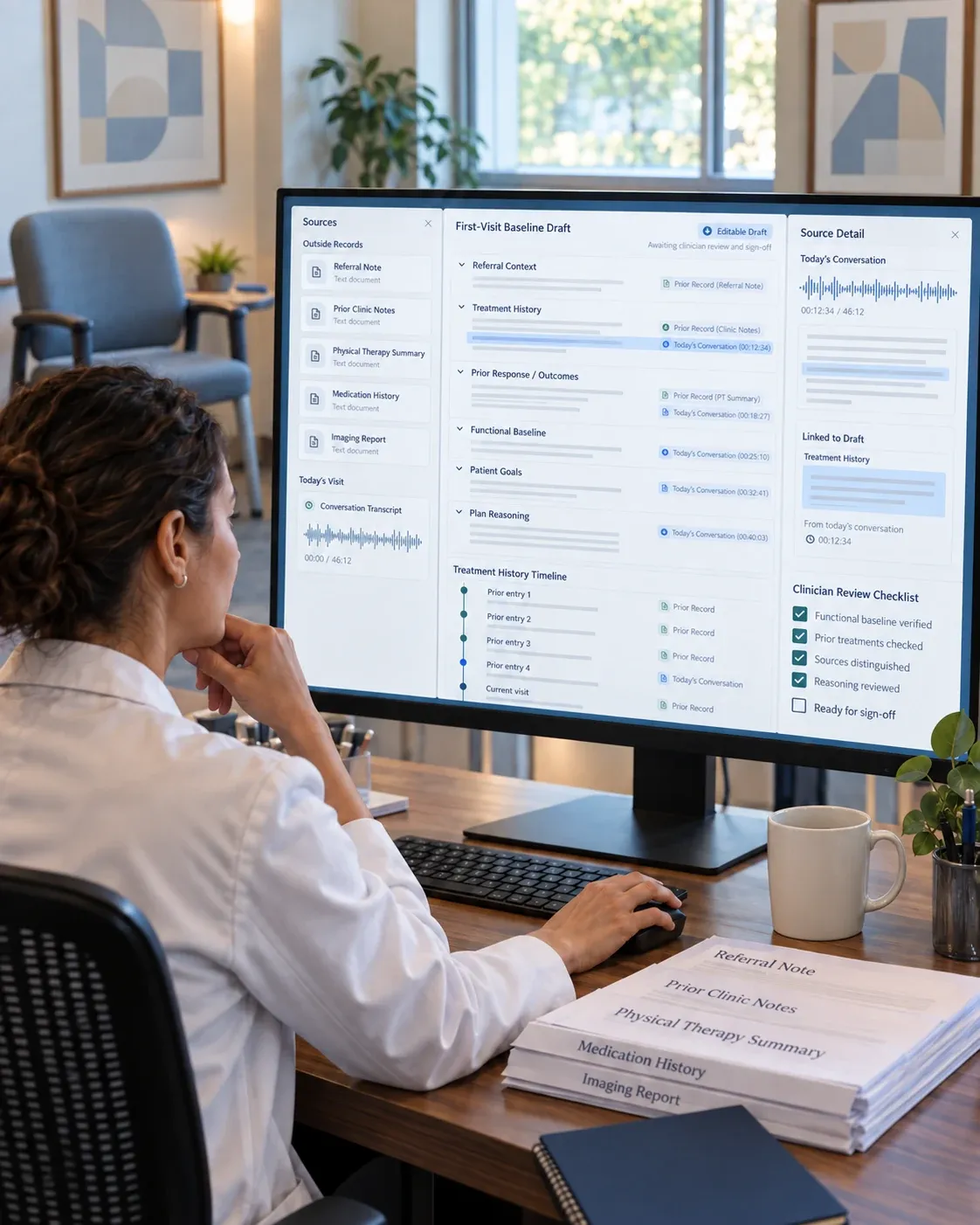
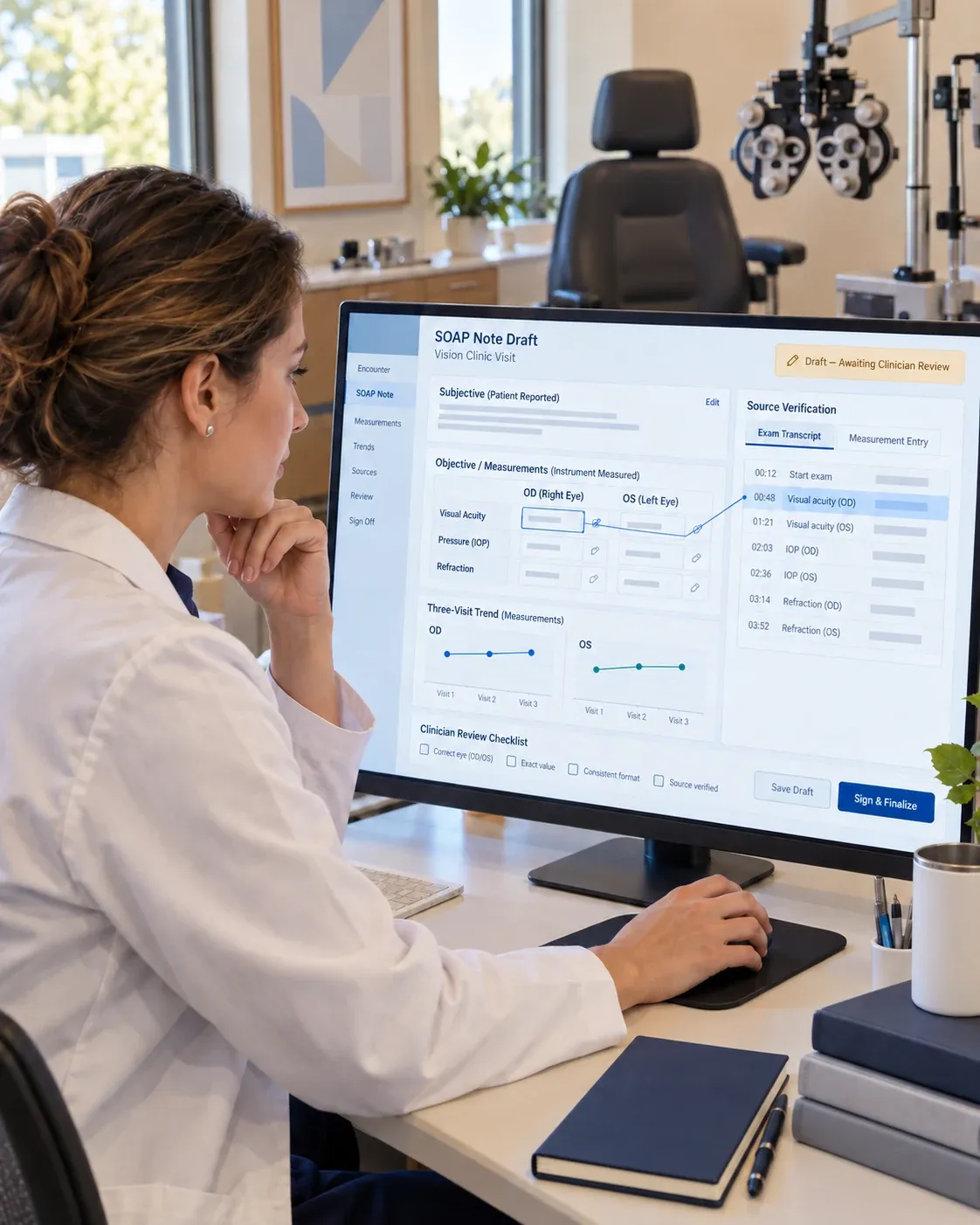
- Review time. An AI scribe produces a draft. The clinician still reads, edits and signs every note. A tool that shows where each statement came from in the visit makes that review faster, which is why traceability affects cost as much as speed does.
- Setup and training. Count the hours to set up templates, learn the workflow and get the team comfortable. A free plan lets you measure this before you pay.
- Workflow fit. If notes have to be copied into another system by hand, that time is a real cost. Check how drafts move into your records workflow.
- Switching later. Ask how you export your notes and documents if you change vendors.
How to Estimate Whether It Pays for Itself
Use your own numbers. The simplest estimate is:
Monthly value = documentation time saved per day × clinic days per month × what an hour of clinician time is worth to you
Then subtract the subscription. For example, if a tool saved a clinician 30 minutes a day over 20 clinic days, that is 10 hours a month. Whether that is worth $149 or $249 depends on how you value those hours: seeing more patients, finishing notes before leaving, or simply not charting at night. This is an illustration, not a promise. Measure the time saved during a trial instead of relying on a vendor's number.
AI Scribe vs. Human Scribe Cost
Human scribes, in person or remote, are usually paid by the hour, and practices also carry the cost of hiring, training and turnover. An AI scribe is a fixed monthly cost that doesn't change with staffing, but it does not replace clinician review: the clinician remains responsible for the final note. We break down the numbers in The Economics of AI Scribes.
A Checklist Before You Buy
- Run a trial on real visits from your own schedule and time the review.
- Confirm the monthly minute and document limits match your volume.
- List which outputs you need (letters, handouts, coding support) and check they are included.
- Ask whether a BAA is available on the plan you will use with patient data.
- Check that every statement in the draft can be traced back to the visit or the source document.
- Ask about annual pricing, cancellation terms and data export.
Where Othisis Fits
Othisis is an ambient AI scribe and medical record summarization tool for clinicians. It listens to the visit, reads the PDFs you upload, and drafts one traceable note, with letters, handouts and codes you review before anything is final. You can start on the free Starter plan with 180 minutes a month and no credit card, and move to Basic or Pro when your volume grows. Start free or book a live demo.
Othisis is a clinical documentation tool. It does not make clinical decisions, provide diagnoses or offer medical advice. Prices are current as of October 2026; see the pricing page for the latest. CPT is a registered trademark of the American Medical Association.