
The Direct Answer
A SOAP note generator turns the visit conversation or a clinician's dictation into a structured Subjective, Objective, Assessment, and Plan draft. The main change is not who owns the note; it is when the first draft is created. Instead of reconstructing the encounter later from memory or shorthand, the clinician reviews a structured draft soon after the visit. The clinician still checks, edits, and signs the note. The software drafts documentation - it does not diagnose, choose treatment, or finalize the medical record.
Where Manual SOAP Charting Actually Breaks Down
Manual charting is difficult for reasons that have little to do with typing speed. A clinical conversation unfolds naturally, but the record must be reorganized into a consistent structure. When documentation is delayed until after the encounter - or until the end of the day - the clinician has to reconstruct that conversation while managing the next patient, inbox work, results, and other demands.
A few specific failure points come up constantly in how clinicians describe their own workflow:
- The Subjective section relies on reconstruction. Timeline details, symptom descriptions, and previous interventions must be rebuilt from memory or shorthand if they were not documented during the visit.
- Copy-forward creates risk. Reusing an earlier note may save time, but stale or inaccurate information can be carried into the current record. AHRQ has documented patient-safety risks associated with copied and cloned clinical notes.
- The Plan gets thin when you're behind schedule. Assessment and Plan are the sections that most directly reflect clinical reasoning, and they're also the first thing clinicians shorten when running late.
- The backlog moves outside clinic hours. Research on ambient documentation tools measures this burden through time spent in notes and off-hours EHR activity. Results differ by setting and product: a 2025 JAMA Network Open evaluation found less time in notes but variation by specialty, while a randomized trial reported different documentation-time effects across two tools.
None of this is a knowledge gap. It's a structural mismatch between how conversations happen and how SOAP notes need to be organized.
What a SOAP Note Generator Actually Does Differently
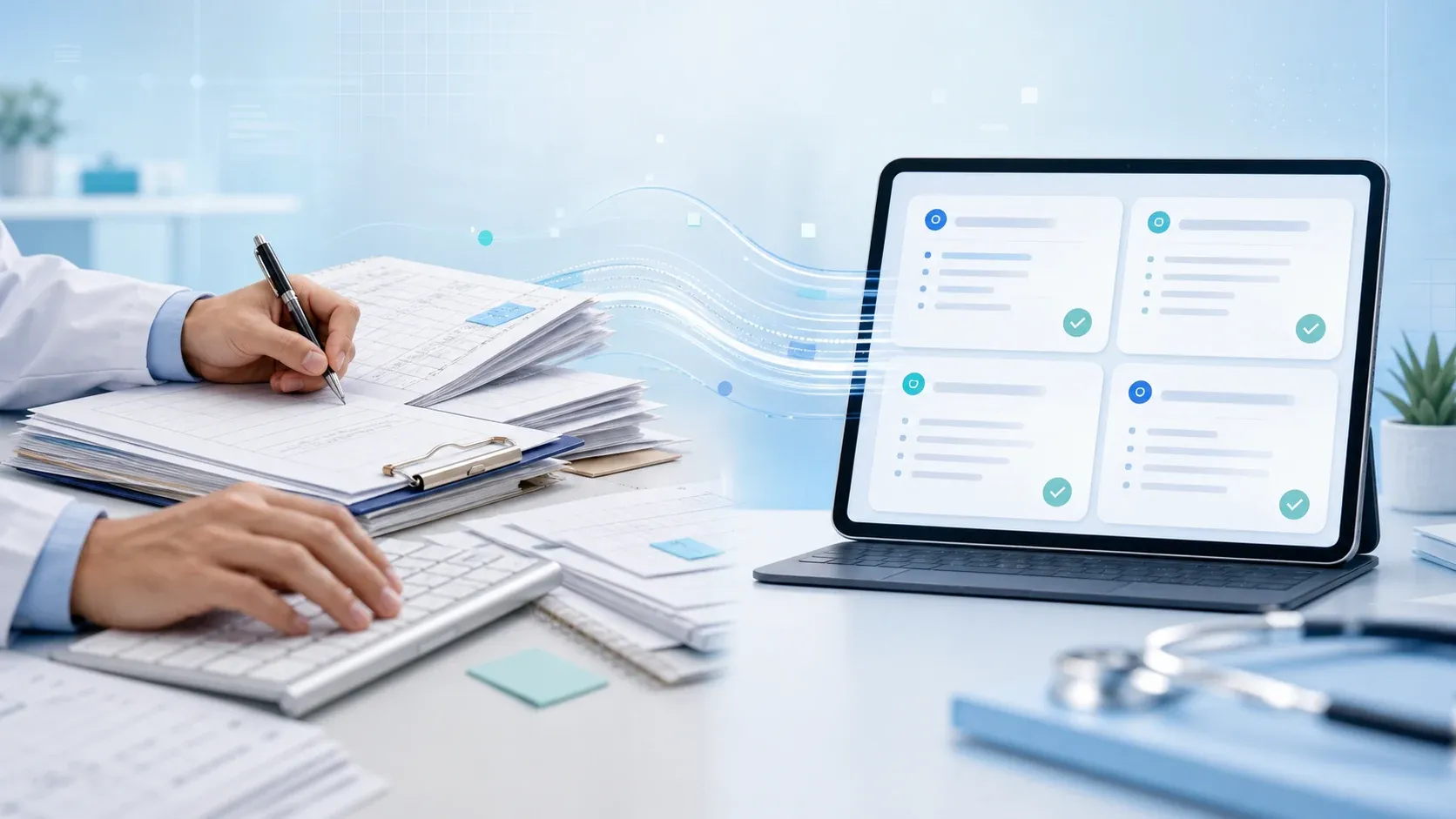
The core shift is when the note gets built, not just how.
Manual workflow
- See the patient, take mental or shorthand notes.
- After the visit (or end of day), reconstruct Subjective and Objective from memory.
- Write Assessment and Plan.
- Review for completeness before signing.
Workflow with a SOAP note generator
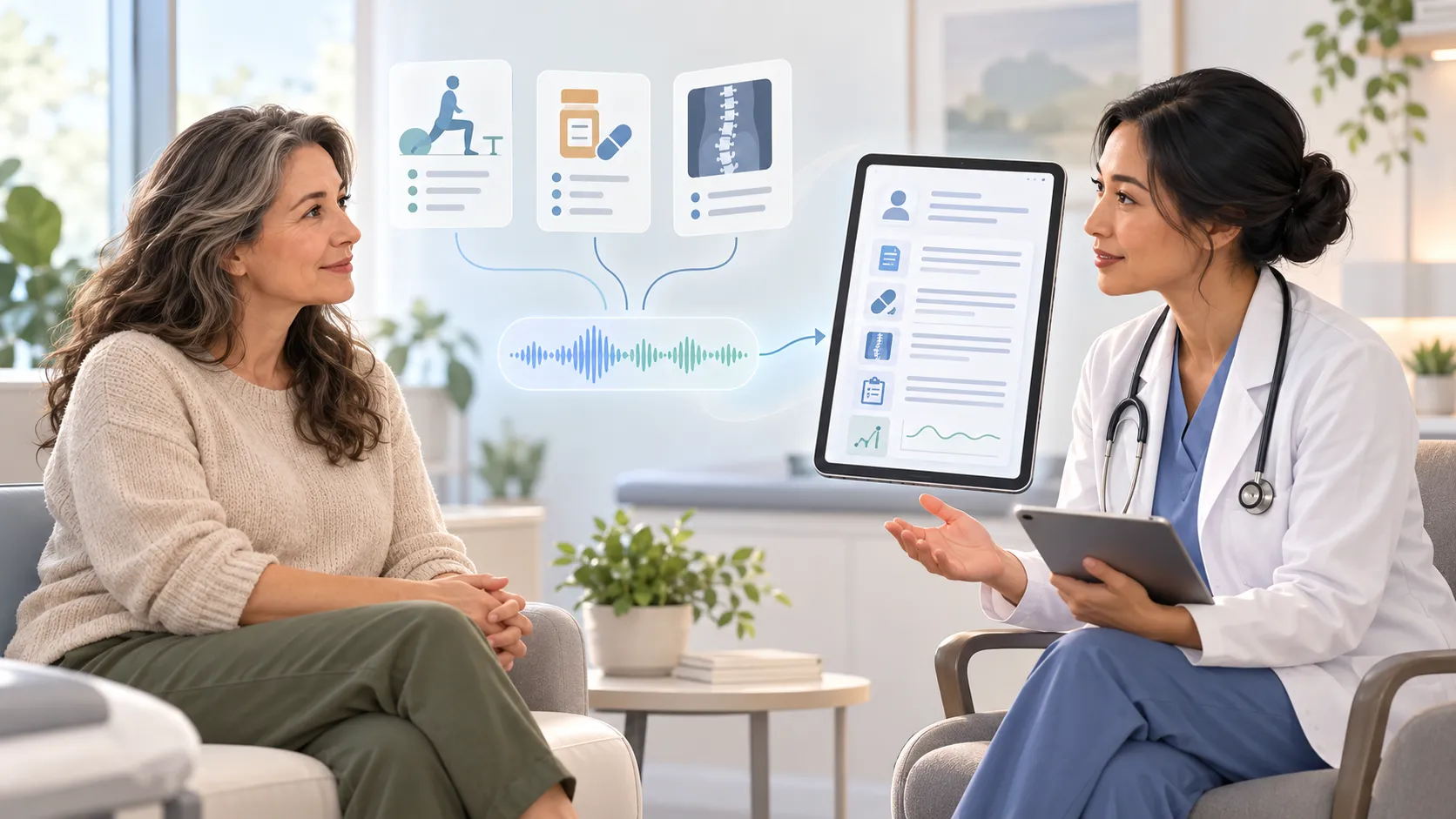
- The visit conversation is captured (ambiently, or via dictation) as it happens.
- The system organizes the available information into a SOAP-format draft.
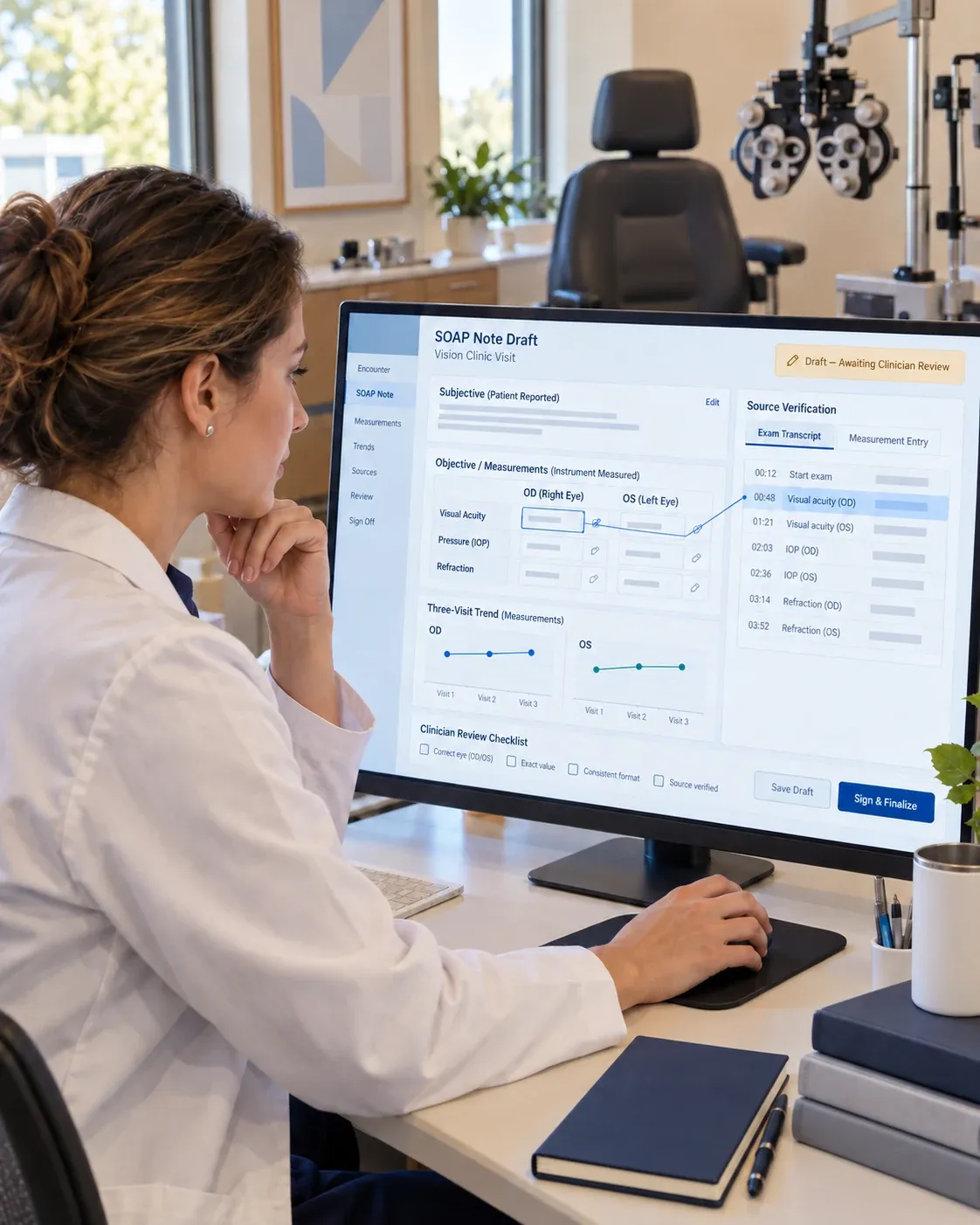
- The clinician reviews the draft, corrects or adds clinical reasoning in Assessment and Plan, and confirms accuracy.
- The clinician signs off. Nothing is finalized without that review step.
The note still needs clinical judgment. A generator can organize what was discussed and documented, but the clinician remains responsible for confirming the history, findings, assessment, and plan. What moves is the reconstruction step: instead of starting with a blank screen, the clinician starts with a draft that can be checked and refined.
SOAP Note Generator vs. Manual Charting
| Part of the day | Manual charting | SOAP note generator workflow |
|---|---|---|
| During the visit | Listen, examine, and take mental or written notes | Capture the conversation with consent, while the clinician conducts the visit |
| First draft | Type or dictate the note during or after the encounter | Generate a structured SOAP draft from the available source material |
| Verification | Compare the note with memory, shorthand, or the chart | Compare draft details with the transcript or source documents where traceability is available |
| Assessment and Plan | Write the clinical reasoning and next steps | Review, correct, and complete the clinical reasoning and next steps |
| Final responsibility | Clinician reviews and signs | Clinician reviews and signs |
The generator changes the starting point, not the standard of review.
Traceability Is the Part Manual Charting Never Had
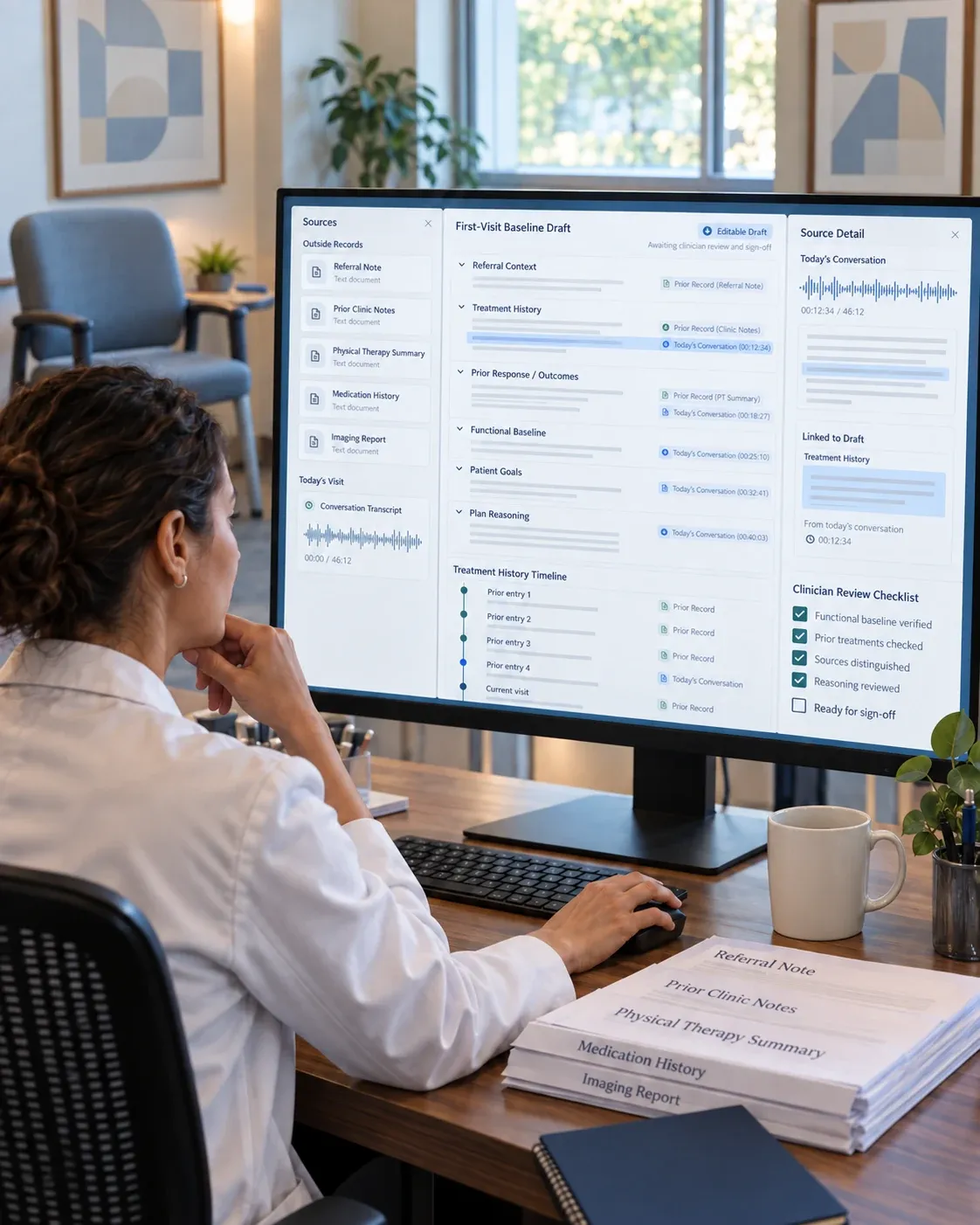
One useful capability that manual charting does not provide is a direct link back to the source. If a draft says a patient reported a symptom for "three weeks," a traceable system can let the clinician return to the relevant moment in the transcript instead of accepting the summary on faith.
That does not make the draft automatically correct. It makes verification faster and more specific. Review before signing remains a real step, not a formality.
What Doesn't Change
- Clinical judgment stays with the clinician. A SOAP note generator drafts structure and captures detail; it does not diagnose, recommend treatment, or make a clinical decision.
- Review and sign-off remain essential. The clinician checks the draft and follows the practice's documentation and approval policies before the note enters the medical record.
- Specialty nuance still needs a human read. Pertinent negatives, red flags, and the clinical significance of a finding are things the clinician confirms, not something the software determines on its own.
Compliance and Data Handling
SOAP notes may contain protected health information, so security and data-handling questions belong in the buying process. The US Department of Health and Human Services explains that a software vendor becomes a business associate when it needs access to protected health information to provide its service. In that situation, the covered entity and vendor generally need a Business Associate Agreement that defines permitted uses and requires appropriate safeguards.
Before adopting a SOAP note generator, ask:
- Will the vendor sign a BAA when required?
- Where is data stored and who can access it?
- Can the clinician trace a drafted detail back to its source?
- Can every section be edited before sign-off?
- What happens to recordings, transcripts, and drafts after the note is completed?
- Does the workflow fit the practice's consent, retention, and EHR policies?
"HIPAA compliant" should be supported by a clear explanation of the workflow and safeguards, not treated as a substitute for due diligence.
Where This Fits in Othisis
With appropriate patient consent, Othisis listens to the patient–clinician conversation during the visit and uses the available encounter information to generate structured SOAP-note drafts. Each draft includes traceability back to the transcript so clinicians can verify details before finalizing - see SOAP Notes with AI Drafts for the full workflow, including how it handles pre-visit chart prep and post-visit follow-up drafting. For visits where the history arrives as PDFs rather than conversation, Automated SOAP Notes from PDFs covers that path specifically. Every draft stays editable, with clinician review required before sign-off - see HIPAA & Compliance for how that's handled on the data side.
·See how SOAP note drafting works in a live demo → · Try it →