
The Direct Answer
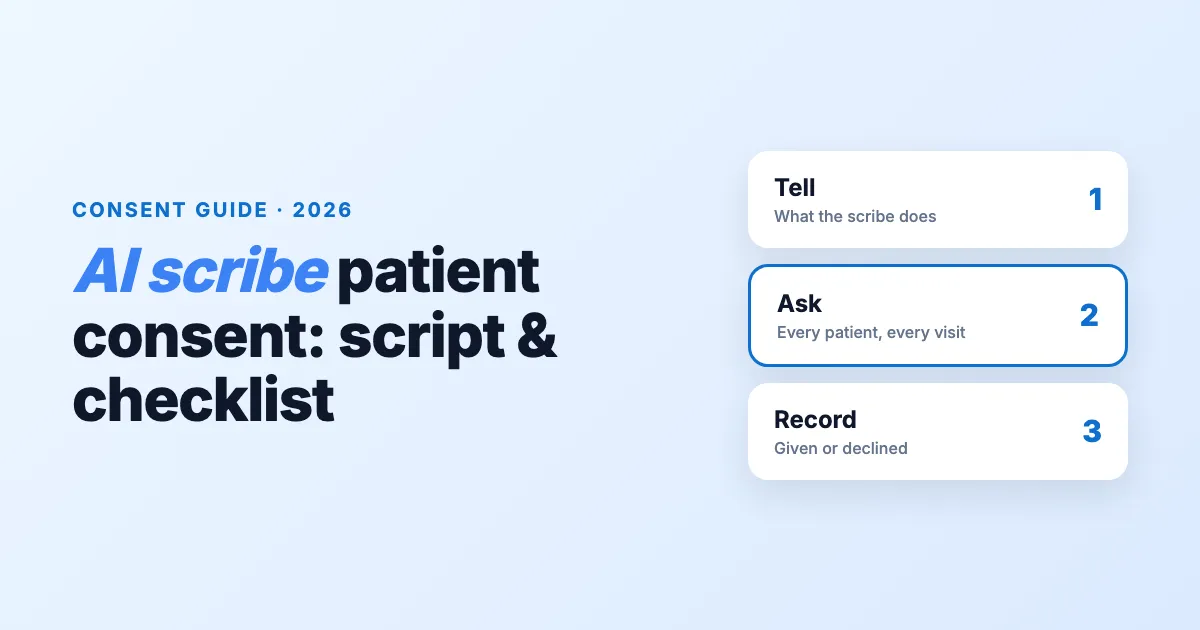
Before an ambient AI scribe listens to a visit, tell the patient what it does, ask whether they agree, make it easy to say no, and note their answer in the chart. Recording laws differ by state: several US states, including California, Florida, Illinois, Pennsylvania and Washington, require every party to a private conversation to agree before it is recorded. Planning around that stricter standard, and asking every patient, keeps the process simple and consistent.
Below is a short script you can adapt, a checklist for your front desk and clinicians, and answers to the questions patients ask most. This is general information, not legal advice. Check your state's law and your organization's policy.
Why Consent Matters for AI Scribes
- Recording law. An ambient scribe captures the conversation in the room. In all-party consent states, recording a private conversation without everyone's agreement can break the law.
- Trust. Patients are more comfortable when they hear about the scribe early, from a person, and know they can decline.
- Clear records. A short note that consent was given or declined protects both the patient and the practice if questions come up later.
A Simple Consent Script
Keep it short, plain and the same every time. For example:
"Today I'd like to use a secure AI assistant that listens to our conversation and drafts my visit note, so I can focus on you instead of typing. I review and edit every note before it goes in your record. Your information is protected under HIPAA. You can say no, and we can stop it at any time during the visit. Is that okay with you?"
If the patient declines, thank them, turn the scribe off, and document the visit the usual way. Nothing about their care should change.
When to Ask
- Before the visit. Mention the AI scribe when the appointment is booked or in the reminder message, so it isn't a surprise.
- At check-in. Have the front desk explain it again and answer questions. A short written notice or form works well here.
- In the room. The clinician confirms verbally before starting the scribe, every visit. Consent for one visit is not consent for every future visit unless your policy says so.
Consent Checklist
- Patient told what the scribe does and that a clinician reviews every note.
- Patient told they can decline or ask to stop at any time.
- Everyone in the room asked, including family members, caregivers and interpreters.
- Answer recorded in the chart: consent given or declined, the date, and who asked.
- Scribe turned off for any part of the visit the patient wants kept out of the recording.
- Staff know how to answer common questions (below) and where the written notice is.
- Your state's recording law and your organization's policy reviewed by whoever handles compliance.
- A Business Associate Agreement (BAA) is in place with the AI scribe vendor before it touches patient data.
Questions Patients Ask
Is a person listening to my visit?
Explain how your tool works. With Othisis, the AI drafts the note from the conversation, and your clinician reviews and edits it before it is final.
Where does the recording go?
Tell patients the data is handled under HIPAA, with encryption in transit and at rest. Othisis stores data in Microsoft Azure in the United States. See our trust and security page for details.
Will the AI decide anything about my care?
No. An AI scribe is a documentation tool. It drafts the note; the clinician makes every clinical decision and signs the note.
Can I change my mind?
Yes. Patients can ask to pause or stop the scribe at any point, and the visit continues normally.
How Othisis Supports a Consent-First Workflow
- The clinician stays in control. You start and stop the scribe, and nothing is final until you review it.
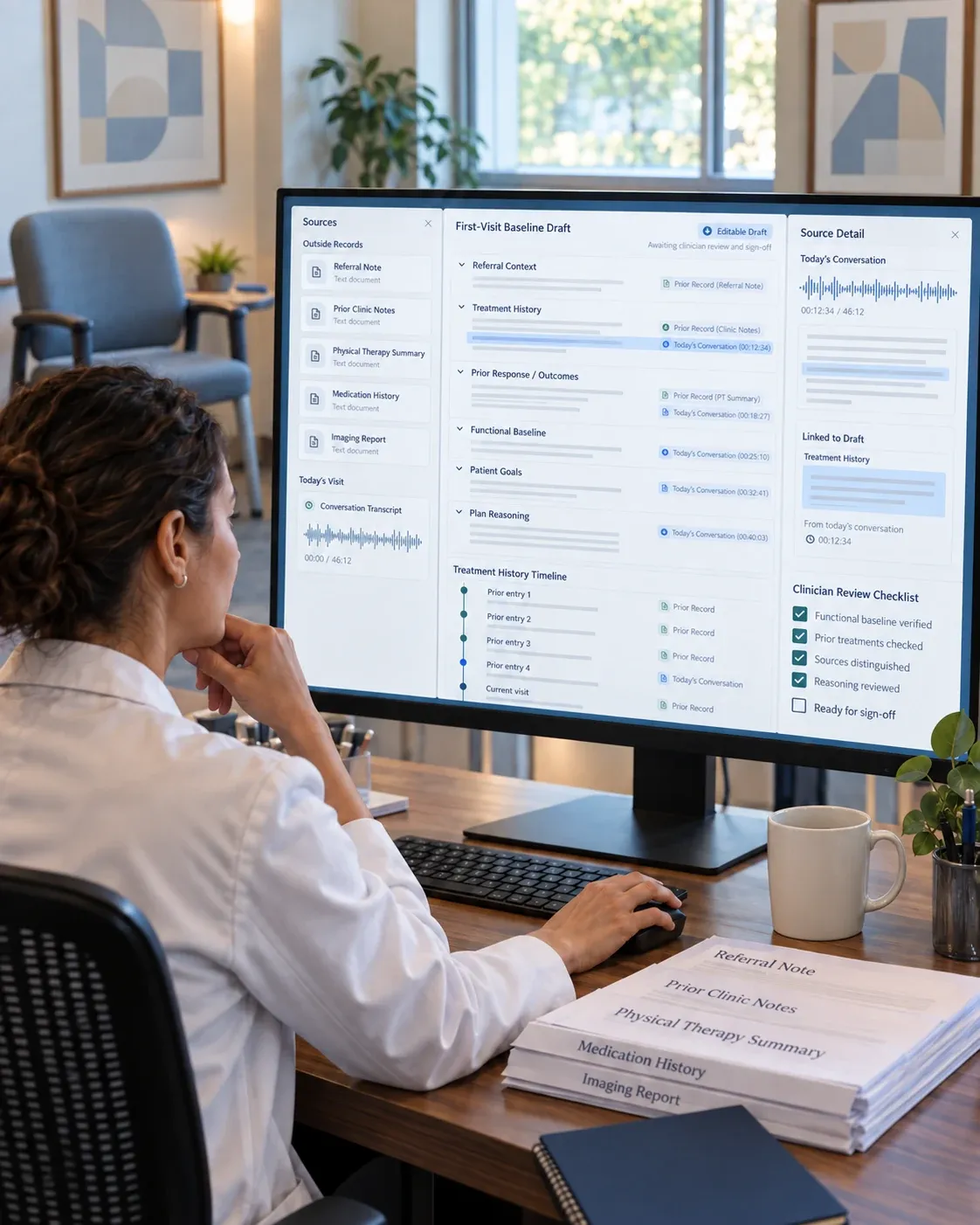
- Traceable notes. Each statement in the draft links back to the moment in the conversation it came from, so you can check it quickly.
- Version history. Every edit is kept, so you can see what changed and when.
- BAA on request. Contact us to put a Business Associate Agreement in place.
Read more about how ambient documentation works in Ambient Clinical Intelligence: What It Actually Does.
Where Othisis Fits
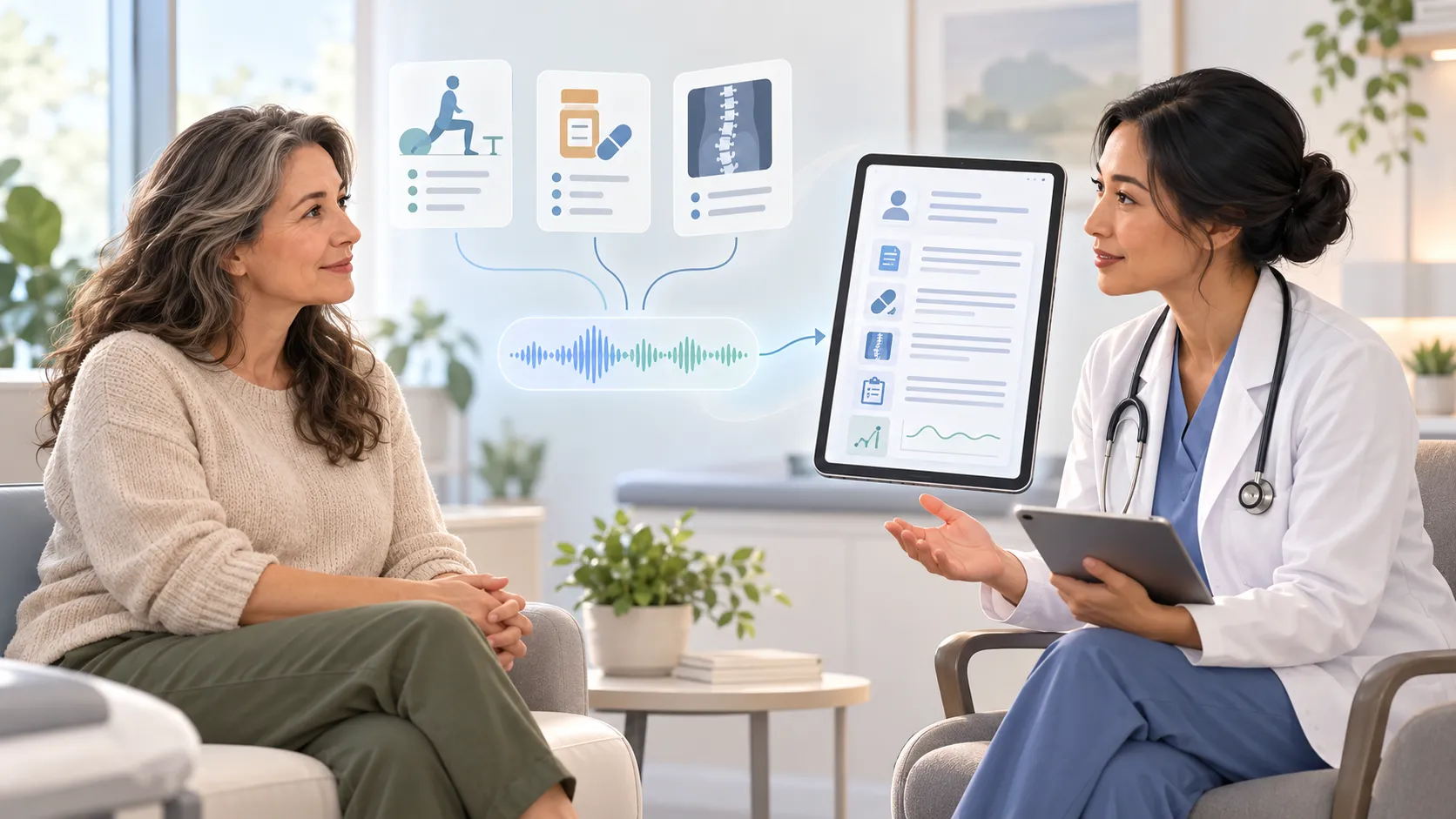
Othisis is an ambient AI scribe and medical record summarization tool for clinicians. It listens to the visit with the patient's permission, reads the PDFs you upload, and drafts one traceable note for you to review. You can start on the free Starter plan with 180 minutes a month and no credit card. Start free or book a live demo.
This article is general information, not legal advice. Recording and consent laws vary by state and change over time. Othisis is a clinical documentation tool. It does not make clinical decisions, provide diagnoses or offer medical advice.