
The Direct Answer
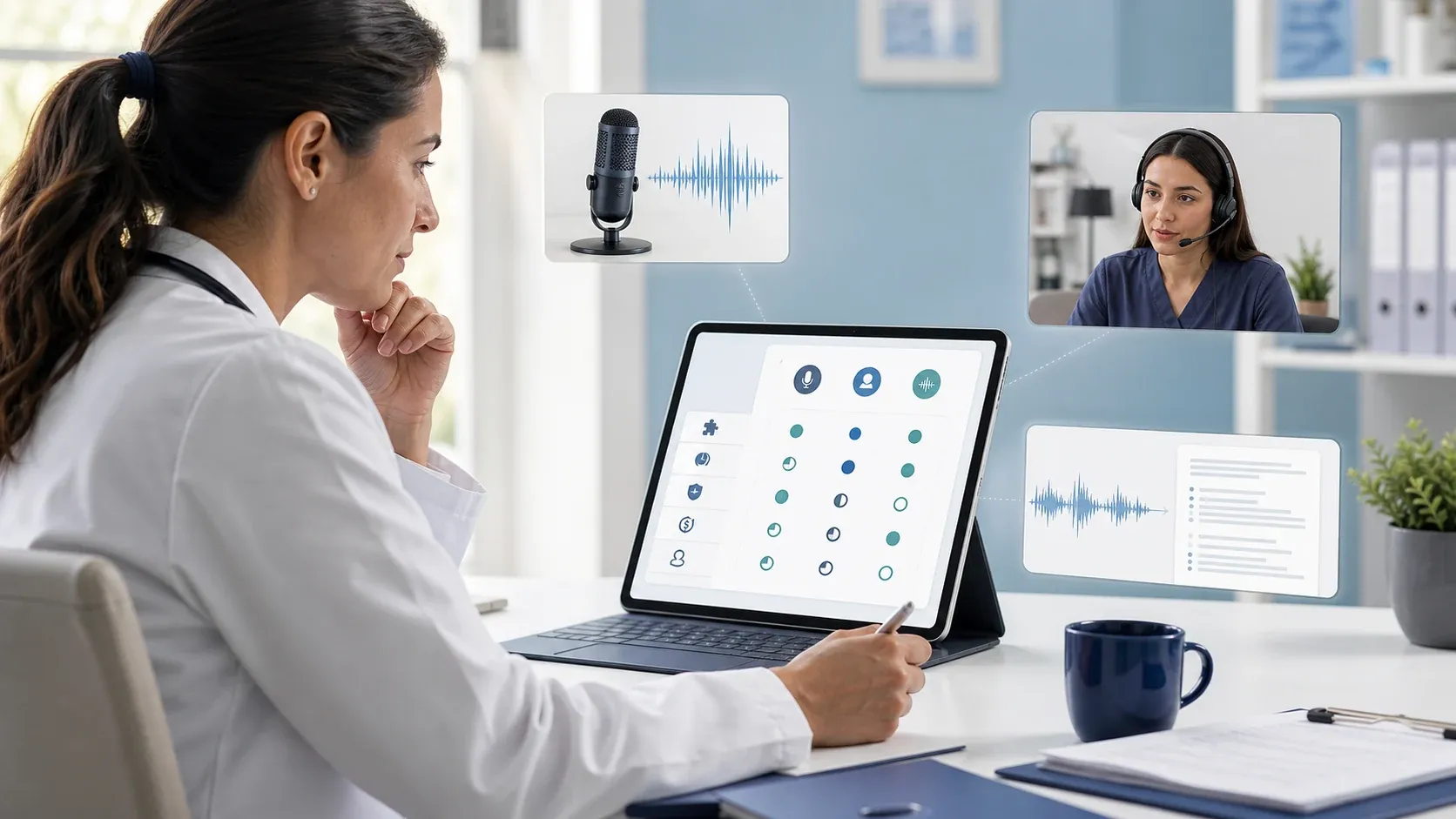
"Medical scribe software" isn't one product category - it's three, and they solve different problems. Dictation software turns a clinician's own spoken narration into text, typed after the clinician decides what to say. Human or virtual medical transcription sends a recording or dictation to a person who types the note. Ambient AI medical scribes listen to the actual patient visit and draft a structured note from the conversation itself. The right choice depends on what's actually slowing your documentation down - narration speed, staffing cost, or the reconstruction work that happens after the visit - not on which one shows up first in search results.
Why "Medical Scribe Software" Search Results Are Confusing
A search for "medical scribe software" surfaces dictation tools, transcription services, and ambient AI scribes side by side, often on the same comparison page, as if they were interchangeable. They aren't. Each one removes a different piece of documentation work:
- Dictation software removes typing. The clinician still has to narrate the entire note - history, exam findings, assessment, plan - in their own words, either during or after the visit.
- Human or virtual transcription removes typing and narration structure. A person listens to a recording or shorthand and produces the note, usually with some turnaround delay.
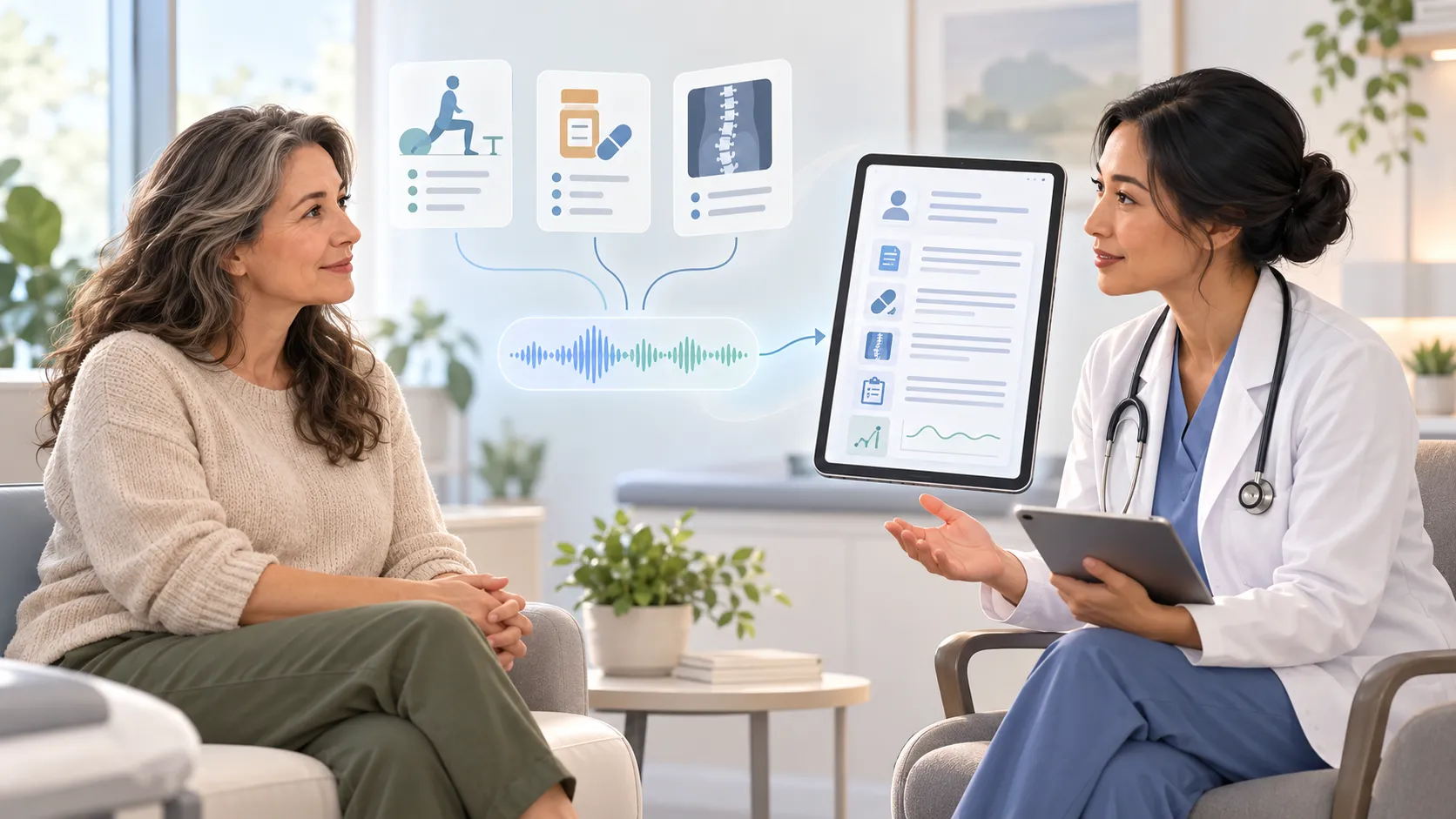
- Ambient AI scribes remove the reconstruction step entirely. The system listens during the visit itself and drafts a structured note from what was actually said, without the clinician narrating separately.
None of these categories replace clinical judgment. In every case, a clinician reviews and signs the note before it becomes part of the record.
The Three Categories, Compared
|
Dictation software |
Human / virtual transcription |
Ambient AI scribe |
|
|
What it captures |
The clinician's spoken narration |
A recording or dictation, processed by a person |
The actual patient-clinician conversation |
|
Narration required |
Yes - full verbal narration |
Yes, or shorthand notes to transcribe |
No separate narration step |
|
Turnaround |
Near-instant to same-day |
Hours to next-day, depending on the service |
Drafted shortly after the visit |
|
Staffing dependency |
None |
Depends on a transcriptionist's availability |
None |
|
What the clinician still does |
Reviews and corrects the typed-out narration |
Reviews the transcribed note for accuracy |
Reviews the draft, adds clinical reasoning, signs off |
|
Best fit when |
Narration is already part of your workflow and typing is the bottleneck |
You want a person handling the write-up and can absorb turnaround time |
Reconstruction after the visit - not typing - is the real burden |
The categories aren't strictly better or worse than each other. A clinician who already dictates efficiently may get most of the value from dictation software alone. A practice with unpredictable documentation volume may prefer transcription's staffing flexibility. The gap ambient AI scribes close is specific: the time spent reconstructing a conversation that already happened, using memory or shorthand, after the patient has left the room.
The Checklist to Use Before You Buy
Rather than ranking products, use this against any vendor in any of the three categories:
- What does it actually remove from your day - typing, narration, or reconstruction? Match that to your real bottleneck, not the vendor's marketing category.
- Does the workflow fit how you already see patients? A tool that requires a new narration habit has a different adoption cost than one that works ambiently in the background.
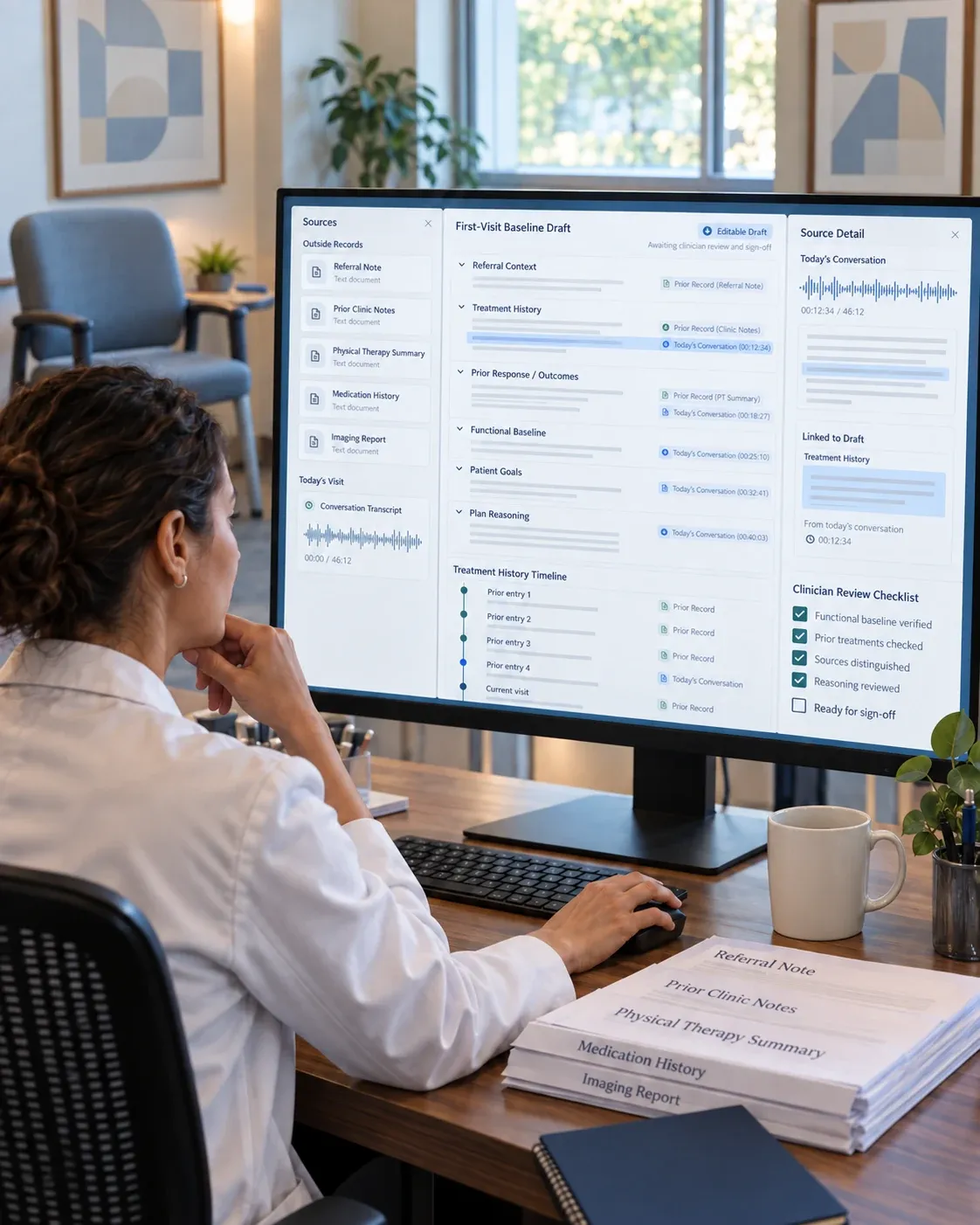
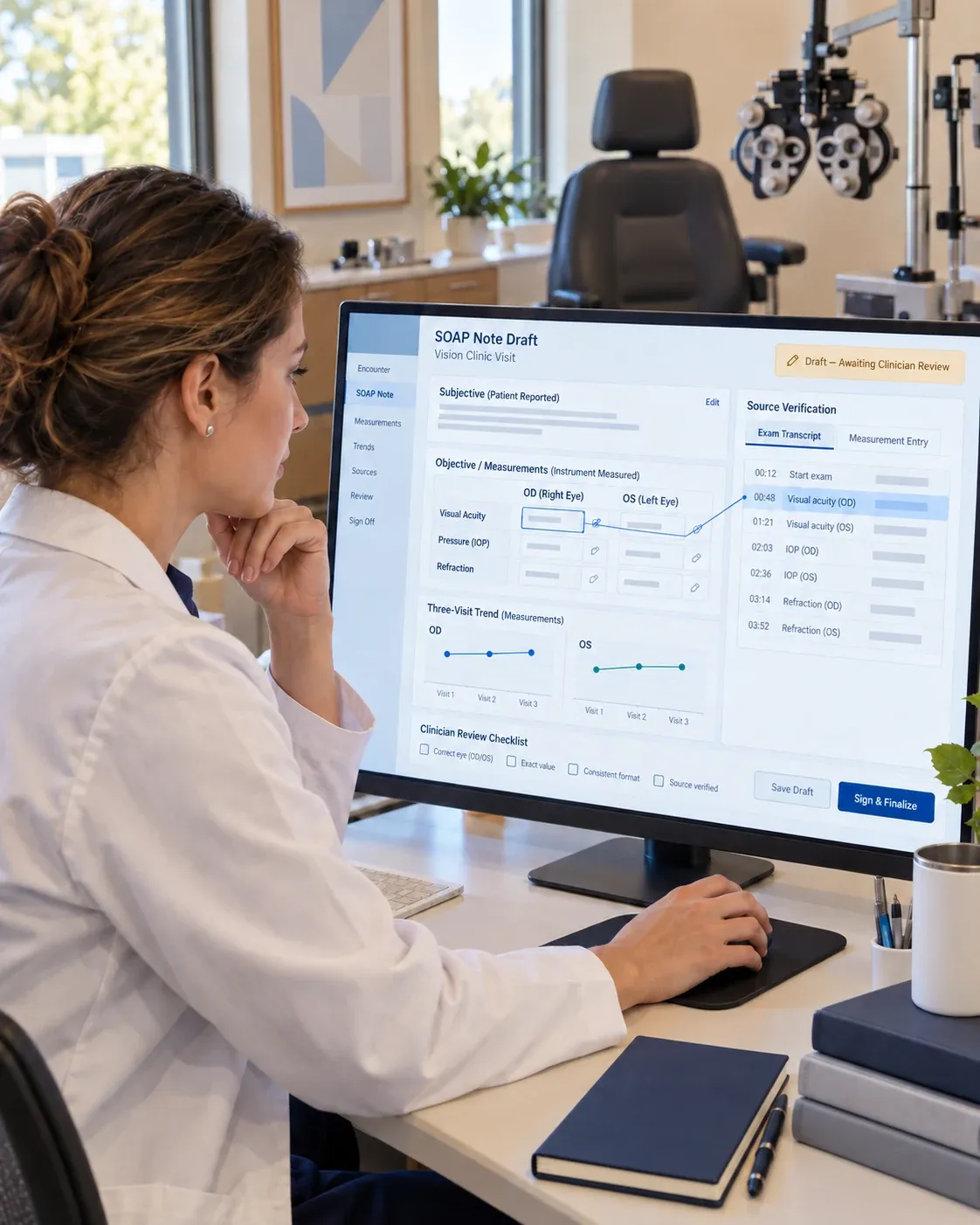
- Can you verify a drafted detail against its source? Ask whether the product links a note's contents back to the transcript, recording, or dictation it came from, or whether you're reviewing on trust alone.
- Who signs the note, and does the workflow make that step visible? Every category should end with clinician review and sign-off - confirm the product doesn't blur or skip that step.
- What's the real cost per note, not just the subscription price? Human transcription bills differently than software subscriptions, and per-note math changes the comparison - see AI Scribe Economics: $249 vs. $15 Per Hour for how that comparison actually works.
- Does it cover more than the note itself? Referral letters, insurance summaries, and pre-visit chart prep are recurring work in most practices - check whether the category you're evaluating handles only the SOAP note or the surrounding documentation too.
- Will the vendor sign a Business Associate Agreement? Covered in detail below - this applies to all three categories, not just AI-based tools.
A Closer Look: Dictation Software vs. Ambient AI Scribes
These two get compared most often, since both are software rather than a staffing service. The difference isn't quality - it's what the clinician has to do during the visit. Dictation software still requires narrating the encounter, in full, in the clinician's own words. An ambient AI scribe listens to the visit as it happens and doesn't require that separate narration step. See Medical Dictation Software vs AI Medical Scribes for the fuller breakdown of what changes between the two.
Compliance and Data Handling Apply to All Three Categories
Every category on this list can touch protected health information, so the buying checklist should include compliance questions regardless of which category you're evaluating. The US Department of Health and Human Services explains that a software vendor becomes a business associate when it needs access to protected health information to provide its service, and in that case, the covered entity and vendor generally need a Business Associate Agreement that defines permitted uses and requires appropriate safeguards. This applies as much to a human transcription service handling recordings as it does to AI software processing a conversation.
Before signing with any vendor, in any of the three categories:
- Will they sign a BAA when required?
- Where is the recording, dictation, or transcript stored, and for how long?
- Who - person or system - has access to the raw audio or text?
- Can you trace a note's contents back to its source?
- What happens to the underlying recording or transcript after the note is finalized?
Where This Fits in Othisis
Othisis is built as an ambient AI medical scribe: with patient consent, it listens to the visit conversation and drafts structured, traceable notes without requiring separate narration - see Best Medical Dictation Software and Best Medical Transcription Software for how it compares against those specific categories. Every draft stays editable, with clinician review required before sign-off - see HIPAA & Compliance for how data handling and BAAs are covered.
See how it works in a live demo → · Try it →