
The Direct Answer
A good referral letter answers three things for the receiving clinician: why you are referring, what you want them to answer, and what they need to know first. To write one from your visit notes, pull the reason for referral and your specific question from what you said in the visit, add the relevant history, findings, tests, prior treatments, medications, allergies and precautions from the chart and outside records, and label anything taken from an older record with its date and source. Leave out anything you did not decide.
Below is a section-by-section template, a quick checklist, the mistakes that slow referrals down, and how an AI tool can draft the letter from the visit for you to review.
What a Referral Letter Should Include
| Section | What goes in it |
|---|---|
| Header | Date, recipient, patient name and date of birth, referring clinician, practice and contact details, and any insurance or authorization reference |
| Reason for referral | In your words, one or two sentences |
| Specific question | What you want the specialist to answer or do, if you asked something specific |
| Relevant history | Only the history that bears on the question |
| Findings | What you found at this visit |
| Investigations to date | Labs and imaging already done, with dates, so they aren't repeated |
| Prior treatment and response | What has been tried and how the patient responded |
| Medications and allergies | Current list, with allergies stated clearly |
| Precautions and restrictions | Quoted as documented |
| Attachments | Reports and records you are sending with the letter |
Step by Step: From Visit Notes to Letter
- Start with your own words. Take the reason for referral and your question from what you said in the visit. If you didn't state a question, don't invent one.
- Set urgency only if you decided it. Write "urgent" only when that was your call, and say why.
- Pull history from the record, labeled. Add older findings and results with their date and source, so a value from last year doesn't read as today's finding.
- Show disagreements. If the patient's account and the record differ on a medication, dose or date, list both with their sources rather than picking one.
- List what's been done. Tests, treatments and responses save the specialist from repeating work.
- Quote precautions exactly. Don't paraphrase restrictions or imaging impressions.
- Attach the evidence. Include the reports the letter refers to.
- Review before sending. Read the whole letter once as the receiving clinician would.
Common Mistakes That Slow Referrals Down
- No clear question. "Please see" leaves the specialist guessing what you need.
- Missing tests. Leaving out recent results often means they get ordered again.
- Old data that reads as new. An undated value from an outside record can mislead.
- Too much history. Pages of unrelated history bury the point.
- Allergies and precautions left out. These are the details the receiving team most needs.
Using AI to Draft the Letter
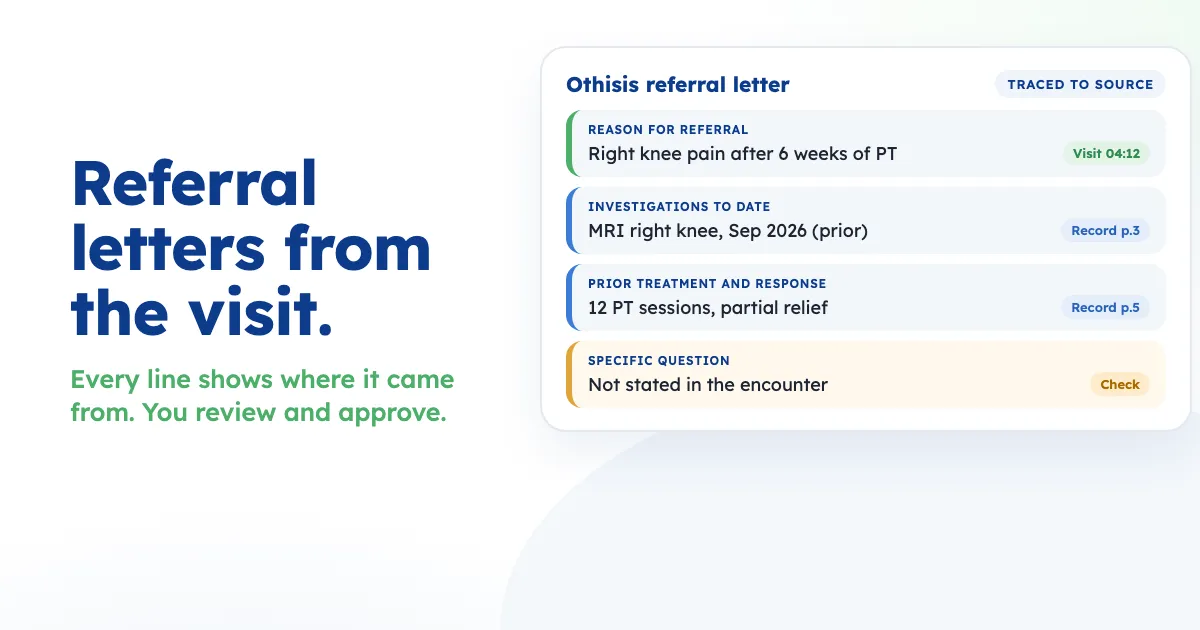
An AI documentation tool can draft the referral letter from the visit recording and the patient's records, so you start from a structured draft instead of a blank page. What matters is that it stays your letter:
- The reason, question and urgency come from you. If you didn't say it, the draft should say it wasn't stated rather than fill it in.
- Every line shows its source. You should be able to click a statement and see the moment in the visit or the page of the record it came from.
- Record and visit stay separate. Prior data should be labeled as prior, with its date.
- No added conclusions. The draft shouldn't add a diagnosis, plan or recommendation you didn't make.
- You review and approve it. Nothing goes out until you have read and edited it.
How Othisis Does It
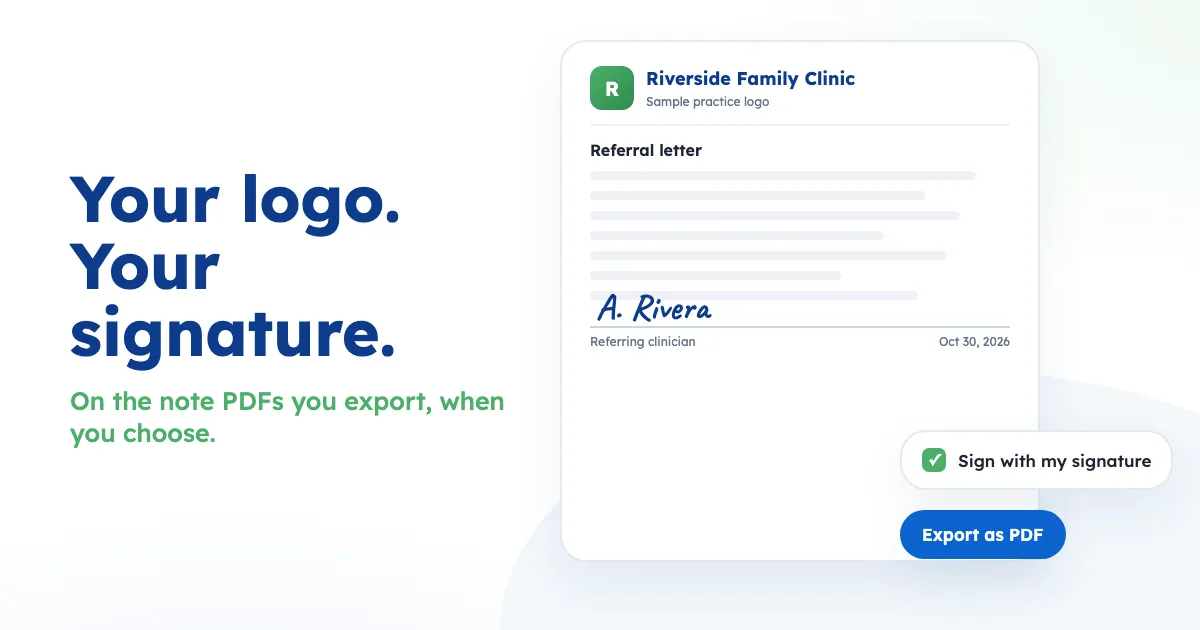
Othisis is one system for the whole visit: schedule the appointment, summarize the outside records, record the visit, then review the note, letters and handout in the patient's record. Once the SOAP note is approved, you can add an Othisis referral letter from the same visit, and if the patient's outside records are attached, generate it with that clinical context. Each line Othisis writes links back to the moment in the visit or the page of the record it came from, and if you didn't state a reason for the referral, the letter says so ("Reason for referral not stated in the encounter"), and sections nothing in the visit documents are left out. You review, edit and approve the letter, and earlier letters stay on the patient profile's Letters tab. You can also set up your own template for how your letters are laid out. Learn more about the referral letter generator and outside record summaries.
The free Starter plan gives you 180 minutes of transcription and 25 PDF pages for your first month, with no credit card. Start free or book a live demo.
Othisis is a clinical documentation tool. It does not make clinical decisions, provide diagnoses or offer medical advice.